Christine Cummings Ceramics: 7 Places to See and Buy
Explore Christine Cummings Ceramics through the studio shop, UK galleries and auction trackers. Compare availability, pricing and buying tips.
You've found a Raku hare on a gallery page, but it's already marked sold. The photograph shows the surface clearly enough to confirm the piece is genuine, yet it doesn't tell you where the next hare will appear, whether the studio has a similar design, or what a comparable sculpture should cost. That's a common position for anyone researching Christine Cummings ceramics. Availability moves between the studio, galleries, archived listings, and secondary-market records.
The seven sources below aren't interchangeable. The official site is best for artist and studio context, the shop is the first place to check for new releases, galleries are stronger for personal sourcing and shipping help, and MutualArt is useful when you're tracking past listings or auction opportunities.
Table of Contents
- 1. Christine Cummings official website
- 2. Christine Cummings Shop
- 3. Northern Lights Gallery
- 4. The Acorn Gallery
- 5. Montpellier Gallery
- 6. Pyramid Gallery
- 7. MutualArt
- Christine Cummings Ceramics, 7-Source Comparison
- Turning Browsing Into a Buying Plan
1. Christine Cummings official website
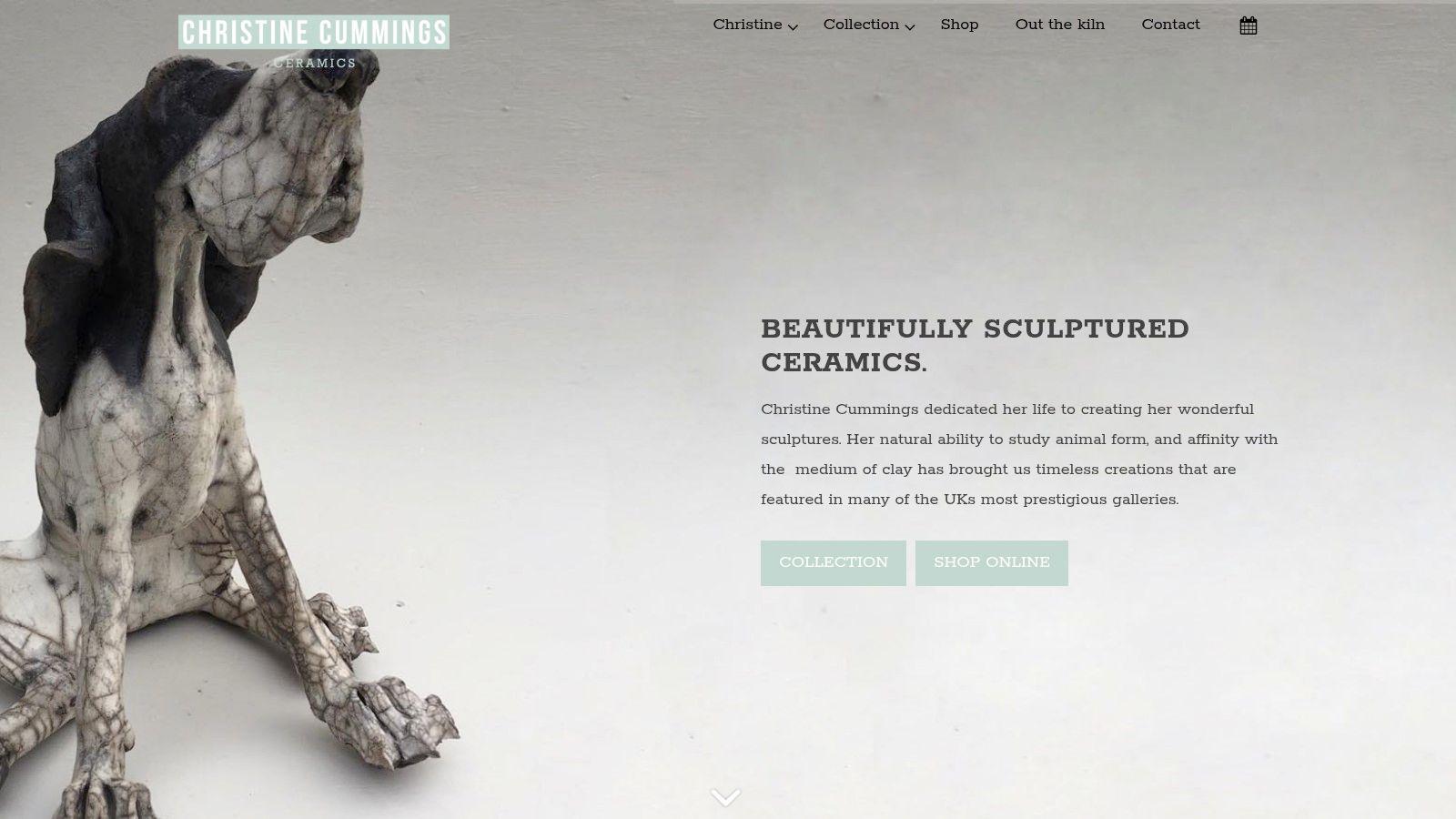
The official Christine Cummings website is the best starting point when you need to understand the artist's practice before you buy. Christine Cummings was a Lancashire-based ceramic sculptor whose work grew from an early focus on pigs into a much wider body of animal sculpture. She studied ceramics at Lancashire Polytechnic, observed rare-breed pigs at agricultural shows, and developed forms through drawing, anatomical study, and direct observation. Fitch and Fellows' artist information provides useful background on that research-led process.
The site is particularly useful for identifying the visual language behind the objects. Cummings worked with hand-built clay forms and used crank-bodied, stoneware, or earth-stone clay, with Raku and smoke firing producing the varied surfaces collectors associate with her work. Subjects extended across pigs, hares, dogs, donkeys, foxes, birds, and other domestic or wild animals.
Best use for collectors
Use the official site to answer questions about authorship, materials, subjects, and studio continuity. It also gives you the most direct route for asking about commissions, availability, or forthcoming work. The site links through to the official shop, so it functions as the studio's reference point rather than a complete retail catalogue.
Practical rule: Read the artist information before comparing prices. It helps you distinguish a hand-built original from a print, card, or later studio product.
The limitation is practical. Informational pages redirect purchasing activity elsewhere, and shipping terms for buyers outside the UK aren't fully clear from the public pages. If you're in the United States or another overseas market, contact the studio before assuming a piece can be shipped or that delivery costs are included.
2. Christine Cummings Shop
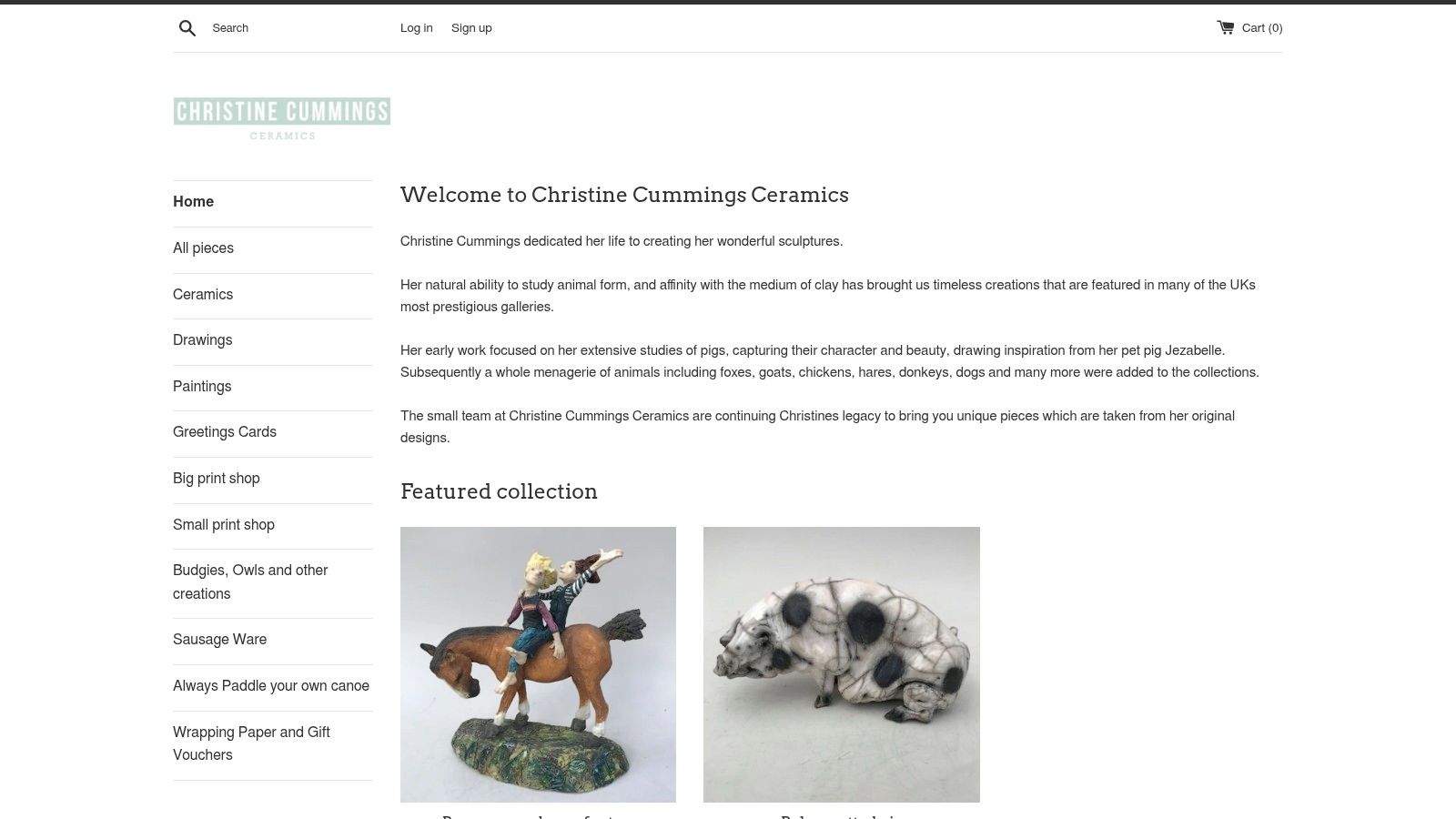
If you are ready to buy rather than study the artist's background, start with the Christine Cummings Shop. Its listings include original animal sculptures such as Raku pigs, hares, goats, donkeys, dogs, and birds, as well as prints and cards based on original artworks. Product pages show prices and status, including available, sold, and out-of-stock items. That makes the shop a practical buying source, not a complete record of every work produced.
The main advantage is provenance. A direct studio listing gives you the clearest way to identify work presented as Christine Cummings' original production or as continuing studio production based on her designs. Buyers need to keep those categories separate. Cummings died in May 2023, after which friends and family members who had worked closely with her continued producing selected sculptures from her original designs. The Old Courthouse Gallery's catalogue records this transition alongside examples of available and sold work.
What works and what doesn't
The shop is strongest for newly listed pieces and direct enquiries. It is less reliable as a permanent catalogue. Works can sell quickly and remain visible as “Sold Out,” so an empty product page does not prove that the design has been discontinued.
- Check status before planning around a piece: A photographed sculpture may no longer be available even when its listing remains online.
- Separate originals from paper goods: Prints and cards offer lower-commitment ways to engage with the imagery, but they are not hand-built ceramic sculptures.
- Confirm international delivery: US shipping and other overseas arrangements may require direct contact. Do not assume that delivery costs, insurance, or packing details are included on the product page.
Use the shop first for direct purchasing and studio provenance. If the subject you want is absent, galleries are better for locating recent arrivals, reserved pieces, comparable examples, or future availability.
3. Northern Lights Gallery
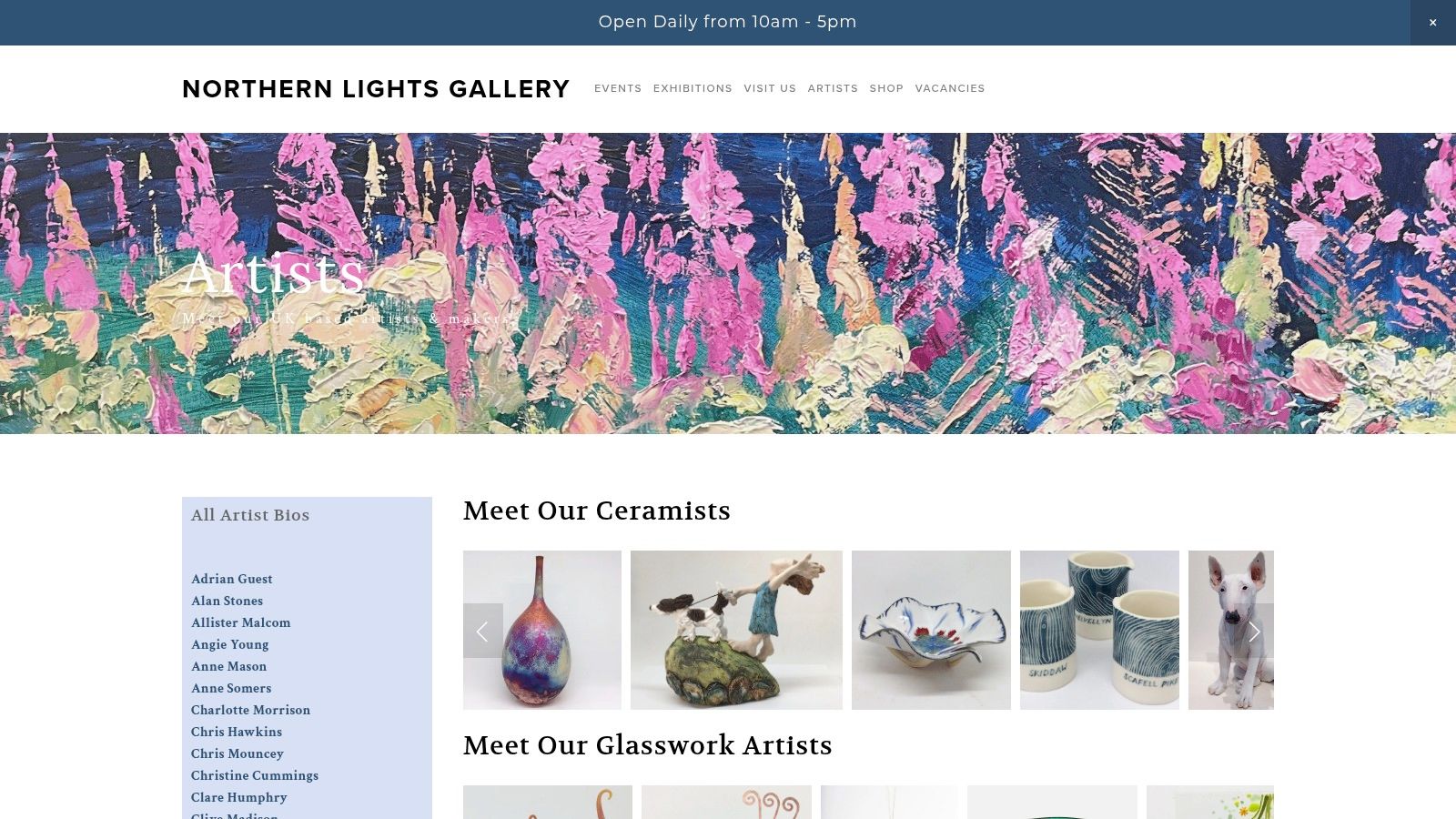
Northern Lights Gallery in Keswick is the most useful gallery source when you want a combination of current listings, past examples, and human assistance. Its artist pages have carried Christine Cummings Studio pieces including hares on hills, dogs, pigs, and donkeys. That range helps you compare the different ways the studio's animal vocabulary appears across subjects and formats.
A gallery archive is valuable because availability pages often preserve sold works. Those records let you study titles, photographs, proportions, finishes, and presentation even after the object has left the gallery. They also provide a practical sense of what the gallery chooses to represent, which can be more informative than browsing isolated marketplace results.
Why this gallery ranks highly
Northern Lights is a good choice when you want to ask a person to help locate a specific type of work. The gallery provides contact details and can respond to questions about stock, delivery, and similar pieces. That's especially useful for fragile ceramics, where packing and insurance deserve confirmation before payment.
The gallery also gives buyers a better reference point for style and pricing than a single live listing. Cummings' work was collected across the UK and Europe and represented by prestigious UK galleries, so gallery records are part of the artist's established market history rather than incidental resale material. John Noott's biography also describes the broader animal portfolio and the continuation of selected original designs after her death.
Many listings are sold, and new stock appears periodically rather than continuously. International shipping terms aren't always displayed on each item page, so ask for a complete delivered cost, packing method, insurance arrangements, and expected dispatch timing before committing. For additional context on gallery operations, see these consignment insights for art gallery owners.
4. The Acorn Gallery
Use The Acorn Gallery's Christine Cummings Studio collection when you are sourcing through a gallery rather than checking a continuously stocked shop. The page brings together original studio works featuring animals such as foxes, pigs, and dogs. Available and sold entries appear together, so it works as both a buying page and a record of what the gallery has handled.
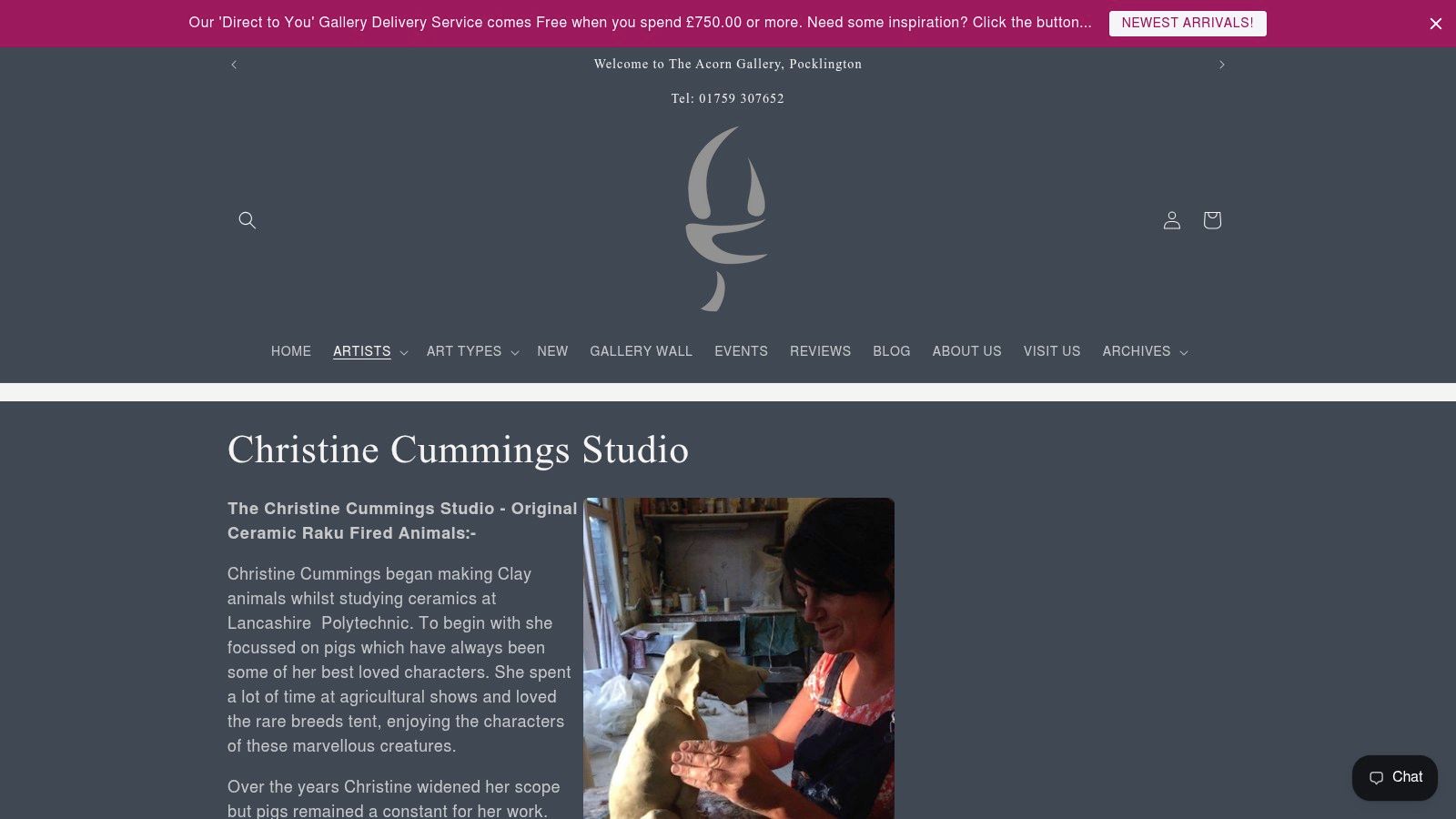
The collection is most useful when your brief is specific but flexible. Ask about a fox, for example, rather than one exact title, or describe the scale and finish you want. A gallery may be able to identify comparable stock or notify you when a suitable original arrives. That approach is more productive than repeatedly searching listings that may disappear as soon as they sell.
Turn sold pages into a clear request
Archived entries show which subjects and forms have appeared at The Acorn. Save the relevant page, then send a focused inquiry containing:
- Subject: Specify a hare, fox, pig, dog, or another animal.
- Finish: State whether you prefer Raku, smoke-fired, or another surface treatment.
- Scale and budget: Give the dimensions and price range you can accommodate, without treating an old listing as a current quote.
- Timing: Ask whether the gallery can contact you when a comparable original becomes available.
Availability changes, and sold-out cycles mean the page may offer no immediate purchase. Confirm US shipping and other international terms directly, including packing, insurance, delivery cost, and dispatch timing. The Acorn Gallery ranks well for collector-led sourcing, but less well for casual browsing when you expect a complete catalogue ready for checkout.
5. Montpellier Gallery
Montpellier Gallery's artist records are most useful for verifying representation and researching past stock, rather than for immediate checkout. Its sitemap links to Christine Cummings artist categories containing both available and sold works. That mix gives a buyer a clearer record of what the gallery has handled, while also explaining why a page may remain visible after the sculpture has gone.
Use a sold listing as a precise reference when contacting the gallery. For example, a sold hare or dog page can show the subject, form, and surface treatment you want. Include that page in an inquiry asking whether a comparable Raku piece is physically available, or whether the gallery expects similar work. This is more productive than requesting “anything by Christine Cummings” without a defined preference.
Montpellier also suits buyers who need advice on placing ceramic sculpture safely. Its staff can clarify how a fired clay work would be invoiced and packed, especially for an overseas delivery. The site does not always provide a direct basket-to-payment route, so availability and the purchase process may need confirmation by email.
The main trade-off is timing. Inventory is intermittent, and an artist record may document a sold work rather than offer an item for purchase. Treat the gallery as a representation and sourcing channel, with a secondary research benefit, rather than as a complete live catalogue.
Before paying, confirm two Montpellier-specific points: whether the referenced or comparable sculpture is currently held at the gallery, and whether the invoice includes the agreed packing, insurance, and delivery arrangements for your destination. Do not infer shipping terms from an archived product page. For collectors seeking gallery support and a useful record of earlier Christine Cummings ceramics, Montpellier ranks above a casual search result, but below a source with dependable instant checkout.
6. Pyramid Gallery
Pyramid Gallery's Christine Cummings ceramics category is a strong source for collectors interested in contemporary craft and Raku wildlife. The York gallery has carried Cummings' work through dedicated artist and product pages, many of which remain visible after the objects have sold or gone out of stock.
The category is useful for comparing presentation. Look closely at the animal's stance, the modelling of the body, the relationship between the clay form and the fired surface, and the way the gallery describes the piece. These details help you refine what you're seeking before contacting the gallery about new stock.
Best for targeted notifications
Pyramid Gallery makes most sense when you have a defined collecting preference. You might want only hares, only birds, or only dark smoke-fired surfaces. The gallery's craft focus means your request can be specific, and you can ask to be notified when a suitable piece arrives.
Inventory is intermittent, and many product pages are marked sold. That's not a reason to dismiss the source. It's a reason to use it as a watching and inquiry channel, not as a dependable instant-purchase catalogue.
If a page is sold, save the image and title before contacting the gallery. A clear reference gives the team something concrete to match.
International shipping policy isn't always listed for each product. Email before purchasing, particularly if you're outside the UK or need a sculpture delivered by a specific date. Ask whether the piece is available, how it will be packed, and whether the quoted delivery includes insurance. Pyramid Gallery is best for curated discovery and future-stock alerts, not for complete market coverage.
7. MutualArt
Use MutualArt's Christine Cummings artist profile for market research, not as a checkout page. The profile aggregates auction-house, dealer, and gallery records, so availability and payment are handled by the linked seller. That extra step makes it unsuitable for an immediate purchase, but useful when direct shop stock and gallery pages are sold out.
The profile can help you trace how Cummings' animal subjects, forms, and finishes have appeared outside primary-gallery channels. Older images and listings may also provide recorded asking or auction information. Treat those records as evidence to compare, not as a complete price history.
Best for secondary-market research
Start with a specific question: are you checking a subject, comparing past prices, or looking for a dealer outside the UK galleries already on your list? MutualArt is most useful when you record the work's title, image, size, condition, seller, and date of the listing, then verify the details with the linked auction house or dealer.
Use the profile to:
- Compare prices: Set documented historical listings beside current gallery asking prices, while allowing for differences in size, condition, provenance, and seller.
- Track subjects: Search for particular animals when the official shop and galleries have no suitable stock.
- Find international leads: Follow linked dealers or auction houses beyond your established gallery contacts.
- Monitor appearances: Use available alerts or return to the profile instead of checking every source manually.
Information varies between records. Some omit dimensions, condition, provenance, or a clear distinction between an original ceramic sculpture and another artwork. Shipping terms may also be unclear, so confirm availability, packing, insurance, and delivery before committing.
John Noott's biography cites examples from approximately £145 for smaller works to £450 for an original ceramic dog. Use these figures as reference points from the cited gallery material, not fixed prices or guaranteed resale values.
Christine Cummings Ceramics, 7-Source Comparison
| Source | Complexity 🔄 | Resources/Cost ⚡ | Expected Outcome 📊 | Ideal Use Case 💡 | Key Advantage ⭐ |
|---|---|---|---|---|---|
| Christine Cummings (official website) | Low, informational pages 🔄 | Low, free access; inquiries may be needed ⚡ | Official artist bio, practice details, contact for commissions; limited direct sales 📊 | Learn about the studio and request commissions or availability updates 💡 | Authoritative source and direct studio contact ⭐ |
| Christine Cummings Shop (official e‑commerce) | Low, Shopify storefront, straightforward checkout 🔄 | Medium, purchase prices vary; high demand affects availability ⚡ | Direct sales when in stock; transparent pricing but frequent sell-outs 📊 | Buy new releases or prints directly from the studio 💡 | Direct-from-studio authenticity and clear pricing ⭐ |
| Northern Lights Gallery (Keswick, UK) | Medium, gallery listings + inquiry process 🔄 | Medium, gallery pricing and shipping assistance ⚡ | Access to gallery-stock pieces, historical pricing, responsive shipping support 📊 | Purchase via a UK gallery with assistance for international shipping 💡 | Established seller with pricing history and quick support ⭐ |
| The Acorn Gallery (Pocklington, UK) | Medium, curated collection and reservation options 🔄 | Medium, possible reservation/waitlist management ⚡ | Curated listings with archived sold works; can reserve or alert collectors 📊 | Collectors seeking curated presentation and future reservations 💡 | Curated view of studio output and waitlist capability ⭐ |
| Montpellier Gallery (Stratford-upon-Avon, UK) | Medium, mix of online listings and inquiry sales 🔄 | Medium, gallery handling and international shipping expertise ⚡ | Combination of for-sale and sold archives; purchase often by inquiry 📊 | Locate similar pieces or ask about upcoming availability and shipping help 💡 | Reputable gallery experienced in packing/shipping ceramics ⭐ |
| Pyramid Gallery (York, UK) | Medium, dedicated artist pages and notifications 🔄 | Medium, intermittent stock; enquiries for shipping ⚡ | Intermittent stock with prior works shown; waiting-list options available 📊 | Contemporary craft collectors wanting alerts for new arrivals 💡 | Focused ceramics curation and waiting-list support ⭐ |
| MutualArt (secondary market tracker) | Low–Medium, data aggregation and alerts 🔄 | Low, basic access; some features may require subscription ⚡ | Historical auction results, pricing benchmarks, and tracked opportunities 📊 | Price benchmarking and tracking secondary-market or auction opportunities 💡 | Aggregated historical data and alerting tools for collectors ⭐ |
Turning Browsing Into a Buying Plan
Start with one source for each job. Use the official website to establish the artist's practice and the studio's relationship to original designs. Check the official shop first for new releases, but don't assume a sold-out listing ends the search. The studio's catalogue includes animals across a broad range of subjects, and the posthumous continuation means future availability may come through the studio or through galleries carrying selected designs.
Choose one gallery for inquiry-led sourcing. Northern Lights Gallery is a strong all-round contact for current and past listings, while The Acorn Gallery and Pyramid Gallery are useful when you want to describe a subject, finish, or style and request notification about future stock. Montpellier Gallery is especially relevant when packing, shipping, and direct gallery communication matter more than instant online checkout.
Use MutualArt as your secondary-market tracker, not as a shop. Its records can help you identify auction or dealer opportunities and compare historical listings, but you'll need to verify the object, condition, provenance, seller, and final delivery arrangements with the actual source. Gallery examples show observable benchmarks, including approximately £85 for Raku ram sculptures and £450 for a ceramic pointer dog in the Old Courthouse Gallery catalogue. Treat those as documented examples, not a universal valuation formula.
Before committing, confirm shipping to your country by email. Several listings don't state international terms clearly, and ceramic sculpture requires more than a simple postage estimate. Ask about insurance, packing, delivery timing, returns, and whether the item is physically available or merely archived.
Set alerts for the subjects you want most, save sold examples that match your taste, and contact galleries with specific references. You can also explore Striped Circle's art picks for broader collecting ideas, but the specialist sources above remain the practical route for Christine Cummings ceramics.
remembers.life helps families preserve the stories, memories, and experiences connected to the people and objects they value. If a Christine Cummings sculpture has a family history behind it, create a lasting record of who chose it, where it lived, and why it mattered.