8 in a Loving Memory Quotes for Every Tribute
Find in a loving memory quotes for memorials, epitaphs, sympathy cards, and social posts, organized by tone with practical personalization tips.
Choosing words after a loss can feel harder than writing something long. You may need a line for a funeral program, a sympathy card, a memorial page, a headstone, or a family photo album, and none of those settings ask for quite the same tone. A phrase that feels comforting on a social post may feel too casual for an epitaph. A line that sounds dignified on a plaque may feel distant in a note to family.
That's why in a loving memory quotes work best when you choose them by purpose, not only by beauty. Some phrases suggest continued closeness. Some celebrate a life fully lived. Some help people remember actively through stories, anniversaries, and family traditions. Others express gratitude, or connect a loved one's memory to future generations.
Remembrance isn't a minor part of grief for many people. A global review of bereavement research covering 14 studies and 8,035 bereaved adults found a pooled 9.8% prevalence of prolonged grief disorder, with community samples often falling in a 5 to 15% range one year after loss, according to this bereavement review in the NIH archive. A short memorial line won't carry all of grief, but it can give shape to love, memory, and identity when words are hard to find.
The good news is that even a familiar phrase can feel personal if you add one real detail. A name, a photograph, a favorite saying, a shared value, or one remembered moment can turn a common tribute into something that sounds like your person.
Table of Contents
- 1. Those we love don't go away, they walk beside us every day
- 2. In loving memory of a life well-lived
- 3. Forever in our hearts, always on our minds
- 4. A precious life, a precious memory
- 5. Your legacy lives on through the stories we share
- 6. Remembering a life full of love, laughter, and cherished moments
- 7. Celebrating the gift of having known you
- 8. Honoring the past, inspiring the future
- 8 In-Loving-Memory Quotes Compared
- Make the Phrase Belong to Their Story
1. Those we love don't go away, they walk beside us every day

This is one of the warmest in a loving memory quotes because it speaks to continued closeness. It doesn't insist on a specific belief system. Instead, it leaves room for different ways people experience ongoing connection, through memory, habit, love, or spiritual comfort.
It often works well when the person being remembered still feels woven into daily life. A widow might use it in an anniversary post with a photo of a morning walk. Adult children might place it on the first page of a funeral booklet beside a candid family picture. A family could also use it on a memorial website where visitors add stories over time.
Where it feels most natural
This line suits settings where comfort matters more than biography. It fits sympathy cards, remembrance posts, memorial garden plaques, and birthday tributes for someone who has died.
If you're creating a longer tribute, pair it with a concrete sentence right after it. “Those we love don't go away, they walk beside us every day. We still hear your laugh whenever the family gathers in the kitchen.” That second sentence keeps the phrase from sounding too general.
Practical rule: Use this quote when you want to reassure people that the bond continues, even though the person is gone.
A good real-world use is a family history project. If you're collecting recorded memories, old photographs, or voice notes, this line can become the emotional thread that holds the project together. The idea is simple. Memory keeps company with the living.
For readers who want language that explores that connection between grief and enduring love, this reflection on grief and love offers a thoughtful companion.
2. In loving memory of a life well-lived

Some memorial lines center sorrow. This one centers dignity. “In loving memory of a life well-lived” shifts the attention from the fact of death to the shape of a life.
That makes it especially useful for obituaries, slideshow openings, printed programs, and tribute pages where you want a calm, respectful tone. It works best when the person's life story is broad and visible, through family devotion, work, service, creativity, friendship, or quiet steadiness.
Best for formal tributes
This phrase has a ceremonial sound, so it fits settings where people expect a little structure. You might see it at the top of an obituary, on the opening slide of a memorial video, or on the cover of a keepsake booklet.
To keep it from feeling too polished, follow it with specifics:
- For a parent: “In loving memory of a life well-lived. She made every guest feel like family.”
- For a friend: “In loving memory of a life well-lived. He showed up early, stayed late, and never let anyone struggle alone.”
- For a partner: “In loving memory of a life well-lived. Your love made our home.”
A phrase like this works best when the details underneath it are concrete, not grand.
This quote also helps when several generations are contributing to one tribute. It gives everyone a simple, shared frame. One person can add milestones, another can add stories, and another can add photographs without changing the tone.
If you're looking for more thoughtful ways to shape a tribute around a person's impact, these ideas for how to honor someone can help you move from a headline into something fuller.
3. Forever in our hearts, always on our minds
A common scene explains why this line lasts. Someone reaches for a recipe, hears a favorite song in a store, or sees a date on the calendar and the person returns to mind at once. That is the feeling this quote names. Memory is still present, still active, and still part of daily life.
“Forever in our hearts, always on our minds” belongs to the group of memorial phrases that support ongoing remembrance rather than a single formal tribute. If the previous quote sounded ceremonial, this one feels lived-in. It suits people who are remembered again and again in small family rituals, anniversary posts, and shared stories that keep resurfacing.
A simple way to choose it is to ask one question. Will this phrase be revisited over time?
If the answer is yes, this line usually fits well:
For a sympathy card or anniversary note: it offers warmth without trying to explain grief. You can keep it short, or add one specific sentence after it, such as “We spoke about her laugh at dinner tonight.”
For a social post: it works best as a caption that pairs memory with a real moment. “Forever in our hearts, always on our minds. Thinking of you today as we make your apple cake.”
For a memorial display or framed tribute: it gives a steady heading above changing photos, letters, or handwritten memories. A rotating display matters here because the phrase suggests continuity. This in-loving-memory frame idea shows one practical way to make the quote part of something people return to.
For a lasting family story: use it as an opening line before a short memory, especially if several relatives are contributing. It acts like a familiar doorway into different voices.
The phrase can feel too general if it stands alone for too long. A good fix is the same one that helps many memorial quotes. Add a detail only this person could own. A gardening habit. A nickname. The way they signed cards. Specifics turn a widely used line into a family line.
This quote is often best for remembrance with motion in it. Not only feeling, but revisiting. Not only loss, but return. That makes it especially respectful for yearly use, because it leaves room for grief to change shape without asking it to end.
4. A precious life, a precious memory
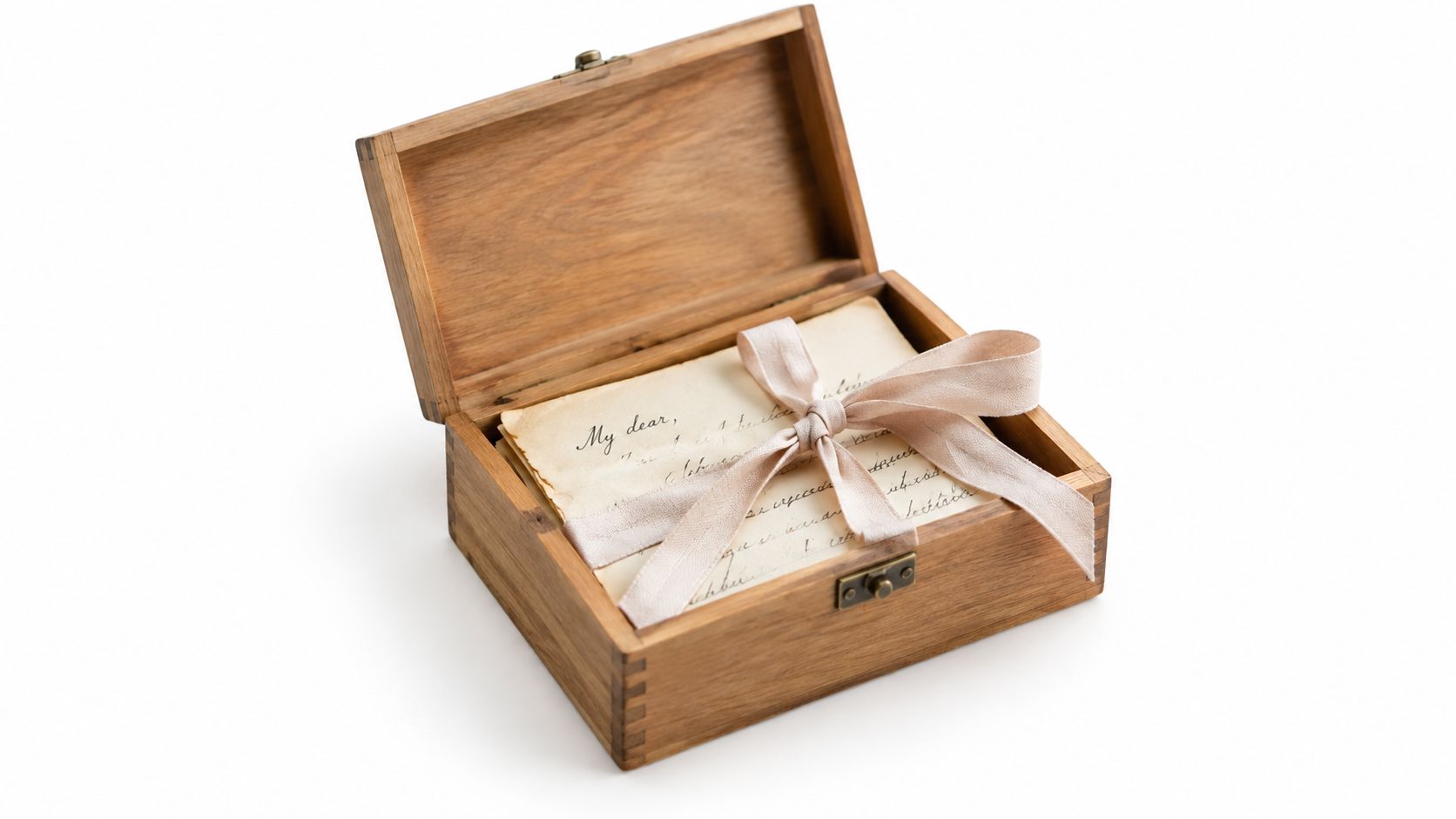
Short lines can sound flat if they're vague. This one avoids that by doing two things at once. It honors the worth of the person's life, and it honors the act of remembering them.
“A precious life, a precious memory” is especially good when space is limited. It suits small prayer cards, memory boxes, bookmarks, plaque inscriptions, and the front page of a family keepsake album.
Why brevity works here
This phrase is gentle and contained. It doesn't try to explain death or summarize a personality. It says this life mattered, and this memory matters too.
That can be a relief when you're early in grief and can't write much. It's also useful when you want the line to support an object, such as a letter bundle, a framed photograph, or a set of interview recordings, rather than compete with it.
Writers often struggle because many quote collections repeat the same formulas and offer little help on when a phrase may feel impersonal. A more useful approach is to keep the line brief but add one specific detail after it, echoing the advice discussed in this memorial wording guide from US Urns Online. For example, “A precious life, a precious memory. Nana's garden still blooms with your roses.”
Short is often best when the short line carries one real detail.
This phrase also works well as a title for a small family project. A box of scanned letters, recorded stories, recipe cards, and photos can all sit under a phrase like this without sounding overly formal.
5. Your legacy lives on through the stories we share
At a memorial table, one person points to a photograph and says, “He told that story every summer.” Someone else laughs and adds the missing detail. A child hears it for the first time. That is the feeling this phrase captures.
“Your legacy lives on through the stories we share” suits tributes that are built from many voices instead of a single formal statement. It centers what people pass along: habits, sayings, values, favorite jokes, and the small scenes that keep a person present in family life. The line is less about summary and more about continuation.
It works especially well when the goal is to gather memories, not just display them. A sympathy card may only need one sentence. This phrase asks for a little more room.
Use it where people can contribute:
- a memorial page with comments
- a tribute video with short clips from several relatives or friends
- a family gathering where each person shares one memory
- an obituary sidebar or printed program that invites stories to be saved later
The phrase also helps solve a common problem. Some relatives knew the person. Others knew only one chapter of their life. Shared storytelling acts like a quilt made from different pieces. No single memory carries the whole life, but together they create warmth, texture, and shape.
If you want to turn scattered memories into something people can keep, this life story writing guide for collecting and shaping family memories gives a practical place to begin.
One respectful way to use the quote is to pair it with a prompt instead of more praise. For example: “Your legacy lives on through the stories we share. Tell us a moment you still remember.” That works well on a memorial website, in a celebration-of-life program, or beside a guest book.
If you need a shorter adaptation, keep the heart of the line and fit it to the setting. For an epitaph, “Your stories live with us” may be enough. For a social post, you might write, “We carry you forward in the stories we still tell.” For a lasting family record, the full version has room to breathe.
6. Remembering a life full of love, laughter, and cherished moments

A memorial table filled with photos often creates the same question. Which tone fits this person best? If the pictures show teasing smiles, crowded dinners, vacations, quiet affection, and everyday routines people still talk about, this phrase usually fits better than a very formal line.
“Remembering a life full of love, laughter, and cherished moments” carries more color than some memorial quotes. It does not focus on one feeling. It holds three at once. Care. Joy. Memory. That makes it useful when a tribute needs warmth and range, especially for someone whose presence was felt in both big celebrations and ordinary days.
It also helps people choose what to say.
Instead of asking relatives or friends for a general tribute, you can invite them into one of three lanes. Love is for the ways this person gave comfort, loyalty, patience, or steady attention. Laughter is for wit, mischief, inside jokes, or the stories that still make people smile through tears. Cherished moments is the broadest lane. It catches the holiday recipe, the weekly phone call, the fishing trip, the porch conversation, or the small ritual no one wants to lose.
That structure works like labeled photo boxes. People do better when they know where to place a memory.
Because the phrase is expansive, it usually works best in places with a little room to breathe. A memorial slideshow can use the full line as an opening title. A printed program can place it above a collage. A social post can shorten it to, “Remembering your love, your laughter, and the moments we still carry.” For a sympathy card, one added detail makes it feel personal: “Remembering a life full of love, laughter, and cherished moments, especially the way you made ordinary afternoons feel special.”
It is less effective for a tight epitaph, where space is limited and simpler wording often reads more clearly. In that setting, you might keep the heart of it and trim the rest.
One more point helps. This quote suits many kinds of relationships because it does not assume a religious belief or a single family shape. It can honor a parent, partner, sibling, friend, grandparent, mentor, neighbor, or chosen family member with equal respect.
A fuller phrase fits best when the life being remembered felt full in everyday ways.
Use it when you want a memorial quote that sounds like a lived life, not only a solemn loss.
7. Celebrating the gift of having known you
At many memorials, there is a moment when someone stops describing the loss and starts describing the gift. A daughter says, “I am more patient because of him.” A friend says, “She taught me how to show up.” The room often softens at that point, because grief is still present, but gratitude gives people somewhere steady to stand.
That is where this phrase helps.
“Celebrating the gift of having known you” belongs to the gratitude group of memorial wording. Its job is different from a phrase meant for daily longing or a phrase meant for preserving legacy. It honors influence. It names what the person gave, not only what death took away.
A simple way to test whether it fits is to ask one question: what remains in the people who loved them?
If the answer comes quickly, this quote usually works well. Maybe the person left behind courage, gentleness, discipline, hospitality, humor, or a family habit that still shapes ordinary days. The phrase works like a thank-you note spoken aloud. That makes it especially natural for a memorial speech, a remembrance journal, a caption under a favorite photo, or a family story recorded for future generations.
Its flexibility is part of its strength, but the setting matters.
For a sympathy card, keep it warm and specific. “Celebrating the gift of having known you. I will always be grateful for how your mother made every guest feel at home.”
For a memorial or celebration of life, give it one clear example. “Celebrating the gift of having known you, especially the calm and patience you brought into hard moments.”
For an epitaph, shorten it. Space is limited, and this phrase can feel too long on stone unless trimmed to its heart, such as “Grateful to have known your love.”
For a social post, pair it with a memory that shows the gift instead of naming it in general terms. A brief story often carries more feeling than a broad statement.
This quote also helps with mixed groups of mourners. Some people need quiet language. Others want to speak with warmth and appreciation. Gratitude can hold both. It does not assume a faith tradition, a legal family role, or one correct way to grieve.
Choose it when the memory you want to leave people with is this: knowing them changed us, and that change still lives here.
8. Honoring the past, inspiring the future
A family is gathered after a memorial, sorting photos, recipe cards, voice notes, and half-remembered stories. Someone asks, “What should we keep for the kids?” This phrase fits that moment well.
“Honoring the past, inspiring the future” carries a forward-looking kind of grief. It respects the person who died, while also pointing to what their life still gives the people who remain. The feeling is less about private sorrow and more about stewardship. You are not only remembering them. You are choosing what parts of their example, values, and story should keep traveling.
That makes this quote especially useful for projects meant to last. It works well on a family history album, a memorial video title, a legacy letter, a scholarship page, a printed program for an anniversary remembrance, or the first page of a box or binder of saved family materials.
It also helps to know where it may feel less natural. In a sympathy card written right after a death, this phrase can sound a little formal unless you soften it with a personal line. On a headstone, it is usually too broad unless the family wants language that speaks to future generations rather than to the individual life itself.
A simple way to use it is to pair the phrase with one clear inheritance the person left behind:
- For a memorial program: “Honoring the past, inspiring the future through her generosity, patience, and love of learning.”
- For a family archive or photo book: “Honoring the past, inspiring the future. May these stories help the next generation know where they come from.”
- For a social post: “Honoring the past, inspiring the future. We still use his advice, his recipes, and his way of making room for everyone.”
- For a lasting family story: “She taught us that care could be practical. We honor her past by repeating that lesson at our own tables.”
This phrase works like a bridge. One side rests in memory. The other rests in continuation. Choose it when the goal is to preserve more than grief alone, especially if you want younger relatives, friends, or community members to feel that remembrance can shape what comes next.
8 In-Loving-Memory Quotes Compared
| Title | 🔄 Implementation Complexity | ⚡ Resource Requirements | 📊 Expected Outcomes | Ideal Use Cases | ⭐💡 Advantages & Tips |
|---|---|---|---|---|---|
| Those we love don't go away, they walk beside us every day | 🔄 Low, simple phrase, easy to apply | ⚡ Minimal, text; optional photo/video | 📊 Comforting; reinforces ongoing presence | Sympathy cards, memorial pages, life story intros | ⭐ Universally relatable; 💡Pair with specific memories or photographs |
| In loving memory of a life well-lived | 🔄 Low, dignified, straightforward | ⚡ Minimal, text; may need chronology | 📊 Celebratory; emphasizes legacy over loss | Memoirs, obituary headlines, memorial videos | ⭐ Legacy-focused; 💡Follow with achievements and timelines |
| Forever in our hearts, always on our minds | 🔄 Medium, implies ongoing rituals | ⚡ Moderate, requires regular engagement/tools | 📊 Validates continued remembrance and family unity | Annual tributes, family memory platforms, memorial walls | ⭐ Supports sustained remembrance; 💡Create rotating photos or annual sharing dates |
| A precious life, a precious memory | 🔄 Low, concise and direct | ⚡ Minimal, works across media | 📊 Motivational; frames memory as heirloom-worthy | Project launches, preservation kits, interview intros | ⭐ Universally relatable; 💡Use as project mission statement and pair with interviews |
| Your legacy lives on through the stories we share | 🔄 Medium, needs structure for storytelling | ⚡ Moderate–High, interviews, archiving, coordination | 📊 Active legacy transmission across generations | Family story collection, oral histories, intergenerational projects | ⭐ Encourages transmission; 💡Develop interview frameworks and a digital archive |
| Remembering a life full of love, laughter, and cherished moments | 🔄 Medium, requires varied materials | ⚡ Moderate, photos, anecdotes, multimedia | 📊 Rich, nuanced portrait of life | Comprehensive memorial videos, scrapbooks, biographical compilations | ⭐ Holistic portrayal; 💡Organize contributions around love / laughter / cherished moments |
| Celebrating the gift of having known you | 🔄 Low, gratitude-focused and simple | ⚡ Low–Moderate, testimonials or reflections | 📊 Promotes appreciation and positive reflection | Testimonial videos, values documentation, journaling prompts | ⭐ Fosters gratitude; 💡Collect stories about personal influence and lessons learned |
| Honoring the past, inspiring the future | 🔄 Medium–High, requires values clarity | ⚡ Moderate–High, legacy letters, structured projects | 📊 Purposeful legacy that guides future generations | Multi‑generational legacy projects, family mission statements | ⭐ Bridges past and future; 💡Identify core values and create legacy letters |
Make the Phrase Belong to Their Story
The best memorial line isn't always the most poetic one. It's the one that suits the setting and sounds honest when you read it aloud. For an epitaph or plaque, concise wording usually works best because space is limited and every word has to carry weight. For a sympathy card, warmth and directness matter more than elegance. For a social post, active remembrance often feels more natural than formal language. For a family archive or memory book, a phrase with a storytelling tone gives you room to build something lasting.
That's why these eight options help in different ways. “Those we love don't go away, they walk beside us every day” offers closeness and comfort. “In loving memory of a life well-lived” gives dignity and structure. “Forever in our hearts, always on our minds” supports recurring remembrance. “A precious life, a precious memory” works when brevity is necessary. “Your legacy lives on through the stories we share” invites collective storytelling. “Remembering a life full of love, laughter, and cherished moments” suits fuller celebrations. “Celebrating the gift of having known you” centers gratitude. “Honoring the past, inspiring the future” turns memory toward legacy.
Before you publish, print, engrave, or post anything, add one specific detail. Use the person's name. Mention your relationship. Include a treasured quality, such as “your patience,” “his steady kindness,” or “her brave humor.” Add one remembered moment if there's room. Even a familiar quote becomes personal when it carries something only your family would say.
That step matters because memorial language can easily drift into general phrases that fit almost anyone. Specificity is what brings the person back into view. “Forever in our hearts” becomes stronger as “Forever in our hearts, Grandpa, especially when we make your Sunday pancakes.” The wording is still simple, but now it belongs to a real life.
If you want to preserve more than a short quote, it can help to think beyond the tribute line itself. A phrase may open the door, but stories, photographs, recordings, and family memories are what keep a life knowable across generations. Remembers.life is one option for creating a lasting record of life stories, memories, and experiences for future generations. For current details about what it offers, visit Remembers.life.
Remembers.life helps families preserve more than a single memorial sentence. It offers a way to gather life stories, memories, and experiences into a lasting record, so a loving tribute can grow into something future generations can return to. If you want to turn today's remembrance into a deeper family archive, visit remembers.life.