Good Memoir Topics: 10 Ideas for Writing Your Life Story
Good memoir topics for older adults and families: 10 life-stage, relationship, and heirloom ideas, plus prompts to turn each one into a story.
A grandchild asks what the house looked like when you were nine. You remember the narrow kitchen, the sound of a radio, and where everyone sat at dinner, but nobody in the room can fully answer. The details feel ordinary until you realize they're the parts your family may not know to ask about later.
Many writers already have a memoir topic. It might be a childhood routine, a family journey across borders, the work you took pride in, or a quiet habit that held your household together. You don't need an extraordinary life or a complete timeline. You need one scene you can describe clearly, a person who would value hearing it, and something that helps bring it back.
The ten topics below span childhood, heritage, work, love, family, hardship, travel, service, faith, and legacy. Each one begins with a scene to draft, suggests the relative who may treasure it, and gives you a single photo, object, letter, or record to use as an anchor. Open your notebook to any page and start with the scene you can still see.
Table of Contents
- 1. Childhood Memories and Growing Up in a Specific Era
- 2. Family Heritage and Immigration Stories
- 3. Career and Professional Journey
- 4. Love Story and Marriage
- 5. Parenting and Grandparenting Reflections
- 6. Overcoming Adversity, Illness, or Loss
- 7. Travel and Adventure Memoir
- 8. Military Service and Veterans' Stories
- 9. Faith and Spiritual Journey
- 10. Legacy Letters and Life Lessons (Ethical Will)
- How the ten memoir topics compare by purpose, focus, and difficulty
- Start With One Memory This Week
1. Childhood Memories and Growing Up in a Specific Era
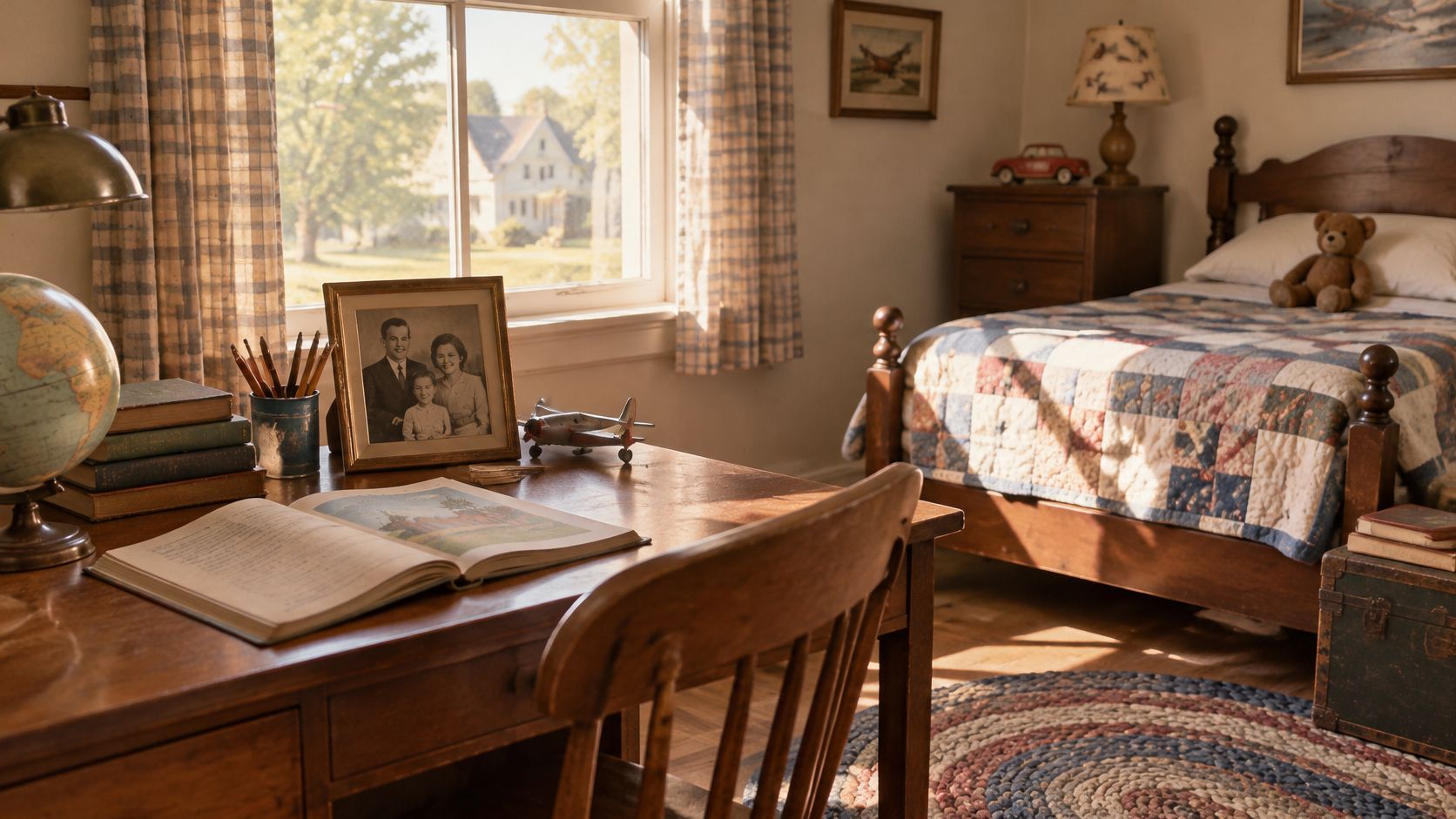
Begin with an ordinary Saturday, not a summary of your childhood. Describe the first sound you heard, what you ate, where you went, and who was already busy. A scene like that can show the neighborhood, family routines, school, holidays, and the technology of the time without turning into a list of facts.
Your grandchildren may value this story most. They can hear what daily life felt like from someone who lived it, rather than only learning about the past through textbooks. Frank McCourt's Angela's Ashes and Mary Karr's The Liars' Club both draw power from vivid childhood scenes, including the ordinary details that place a family in a particular world.
Start with the room: Write what you could see, hear, and touch before explaining what the scene meant to you.
Use one family photograph as your anchor. Write down who appears in it, what you recognize in the background, and what you can't identify. Then check your recollections with siblings or other relatives. If you add details about the wider period, verify them with old newspapers or other records instead of relying on memory alone.
A practical example: if the photograph shows you in a school uniform, start with getting dressed that morning. What did you carry? Who walked with you? What happened after school? Let the scene lead into the wider story of growing up.
2. Family Heritage and Immigration Stories
Draft the moment someone packed a suitcase, crossed a border, arrived at a new home, or taught you a family phrase. Start with what was said and done, not with a broad claim about where your family comes from. A relative who made the journey, or a younger family member trying to understand their roots, may value this account most.
Migration connects private memories to a global story. The United Nations estimates that 304 million people were international migrants in 2024, representing 3.7% of the world's population, according to its overview of global migration. Your memoir can preserve what a total cannot: why your family left, what they carried, what they missed, and how home changed after arrival.
Choose one family photograph as the anchor. Ask the oldest living relatives what they remember about the people, place, and customs in it. Record a recipe or phrase with the story behind it, and compare recollections with documents such as census records or ship manifests. If relatives disagree, write down both versions and who told each one. Uncertainty belongs in family history too.
For another way to explore family origins, see this guide to ancestry and family history. A useful first scene might be a meal at a new home: who cooked, what ingredients were unfamiliar, and which familiar tradition made the place feel less strange?
3. Career and Professional Journey
Write about the day you first understood what your work required. It might be a customer waiting at the counter, a machine that wouldn't cooperate, a classroom that fell silent, or a decision you had to make without a clear answer. A child or grandchild choosing a path of their own may value the scene, especially if you explain what the job looked like from the inside.
Howard Schultz's Pour Your Heart Into It and Michelle Obama's Becoming show how work can sit alongside personal reflection. You don't need a famous career for this topic to matter. A family memoir gains substance when you explain the daily tasks, the skills you built, and the people who helped you learn.
Use one workplace object as your anchor: a tool, uniform, name badge, or photograph of your work area. Describe what you did with it and what a stranger might misunderstand about the job. Then add one mistake or difficult decision. A story made only of promotions and awards can feel distant; a story about what went wrong and how you responded gives descendants something practical to carry forward.
For example, if your anchor is an old work apron, begin with putting it on before a busy shift. Who taught you the routine? What did you check before opening? What advice would you give a younger relative facing a first job?
4. Love Story and Marriage
Start with the first conversation you can still hear. Where were you standing? What caught your attention? What did you say, and what did you think afterward? Your children or grandchildren may want this story, not as a polished romance, but as the beginning of a relationship they've known only from the inside.
Calvin Trillin's About Alice offers a portrait of a partnership through affection and remembrance. Joan Didion's The Year of Magical Thinking reflects on marriage and loss. Both suggest that a relationship memoir can be about the everyday bond as well as its hardest moments.
Anchor the story with one saved card or letter you exchanged. Read it before drafting, then write the scene around the words on the page: who wrote them, what was happening at the time, and what neither of you knew yet. If you're writing as a couple, draft your memories separately before comparing them. Different versions can add dimension, but you don't have to resolve every disagreement.
Write what the relationship looked like on an ordinary day, not only on the day you met.
A worked example: use a card from an anniversary to recall the routine behind it. Who made breakfast? Which small ritual lasted longer than either of you expected? Decide what private details should stay within the family before you share the finished story.
5. Parenting and Grandparenting Reflections
Choose a scene from a family routine: getting a child ready for school, making a holiday meal, or staying up when someone was ill. Describe what you did and what you were trying to teach, even if you weren't sure it would work. Adult children and grandchildren may value the reasoning behind traditions they remember but never thought to ask about.
Anne Lamott's Operating Instructions writes about early parenthood, while Roz Chast's Can't We Talk About Something More Pleasant? reflects on caring for aging parents. Parenting stories can include both sides of family care: raising children and supporting older relatives. A story about ordinary responsibilities can be as revealing as a major milestone.
Pick one household object as your anchor, such as a recipe card used for family holidays. Explain who wrote it, how you used it, and whether you changed anything over time. Ask an adult child for their memory of the same tradition. They may remember a detail you missed, or see the occasion differently.
For a place to begin a conversation, use these interview questions for grandparents. Try drafting one scene about a family rule or ritual. What problem was it meant to solve? What did the children think of it then, and what do they understand now?
6. Overcoming Adversity, Illness, or Loss
Start with a small, concrete moment after the hardest part: the first meal you could finish, the first time you returned to a familiar place, or the conversation that helped you ask for support. A scene like this can show how recovery really unfolded. Someone in the family facing a similar challenge may value the account, especially if it describes both care received and choices that helped.
Michael J. Fox's Lucky Man reflects on living with Parkinson's disease, while Tara Westover's Educated tells a story of a difficult upbringing and education. These examples show how a memoir can face painful material without being only a record of pain. Include what changed afterward, what helped, and what you still don't know.
Use one letter as an anchor, perhaps a note from someone who stood by you. Describe when you received it and what you needed from the person who wrote it. Before drafting, decide who will read the story. A family keepsake can include details you wouldn't share publicly, and you can set boundaries around other people's private experiences.
If writing brings up more than you can manage alone, pause and seek support from a therapist or a writing group. You can also read this reflection on grief and love. A useful first draft doesn't need to explain everything. It needs to tell one true scene and what it meant to you.
7. Travel and Adventure Memoir

Begin with a moment when the trip stopped going to plan: a missed train, a sudden change in weather, or a conversation with someone whose language you barely understood. Describe the place and the people before explaining what the journey taught you. A relative who enjoys travel, or one who has never visited the place, may value the story for different reasons.
Elizabeth Gilbert's Eat Pray Love follows travel and self-discovery, while Cheryl Strayed's Wild turns a long hike into a story of change. The place matters, but so does your response to it. A travel account that only lists destinations and sights can read like an itinerary. Show the decisions, surprises, and encounters that changed your view.
Let the place enter the story through what you noticed, not through a guidebook description.
Use one postcard as your anchor. Write what you remember about sending it, who you addressed it to, and what you left out. An old journal or photo can help you recover the route and setting; check uncertain details rather than filling gaps with invented precision.
For example, a postcard from a coastal town might lead to a scene about searching for dinner after a long day. Who helped you? What did you eat? What did you understand differently by the time you sent the card?
The video below offers another way to think about journeys and personal change.
8. Military Service and Veterans' Stories
Start with an ordinary moment in uniform: waiting for instructions, writing a letter home, cleaning equipment, or returning to barracks. Daily routines can make service understandable to relatives who know the broad outline but have never heard what a day felt like. A child, grandchild, or family member who waited at home may value the details most.
Eugene B. Sledge's With the Old Breed gives a firsthand account of fighting in the Pacific during World War II. Your own story doesn't have to cover an entire service history. It can focus on one training exercise, assignment, friendship, or transition back to civilian life.
Anchor the scene with one letter you sent or received. Read it and note what you chose to share at the time, and what you held back. Check dates and assignments against your official service records, such as a DD-214 for U.S. veterans. That helps separate what you remember from details a record can confirm.
If you plan to donate a written account or recording, consult the Library of Congress Veterans History Project for its guidance. A practical scene might begin with opening a letter from home after a long day. What did you notice first? What would the person who wrote it have wanted to know about your life then?
9. Faith and Spiritual Journey
Write the scene when your beliefs became personal. It might be a family prayer, a conversation with a trusted spiritual guide, a period of doubt, or a moment when a familiar practice gave you comfort. A younger relative may value this story as a way to understand the beliefs and traditions behind family choices.
Augustine of Hippo's Confessions and Thomas Merton's The Seven Storey Mountain are well-known examples of spiritual memoir. You don't need to tell readers what to believe. Show how your faith, philosophy, or questions affected your decisions and relationships.
Pick one object as your anchor: a prayer book, a family keepsake, or a text you returned to. Describe where it came from and how you used it. Then name the people who shaped your path, including those who asked difficult questions. Specific scenes of doubt or conviction usually tell more than a broad explanation of your beliefs.
For instance, a worn prayer book might bring back a quiet evening with a parent or grandparent. What did they read aloud? What did you understand at the time? Write with respect for relatives who believe differently, and make room for changes in your views.
10. Legacy Letters and Life Lessons (Ethical Will)
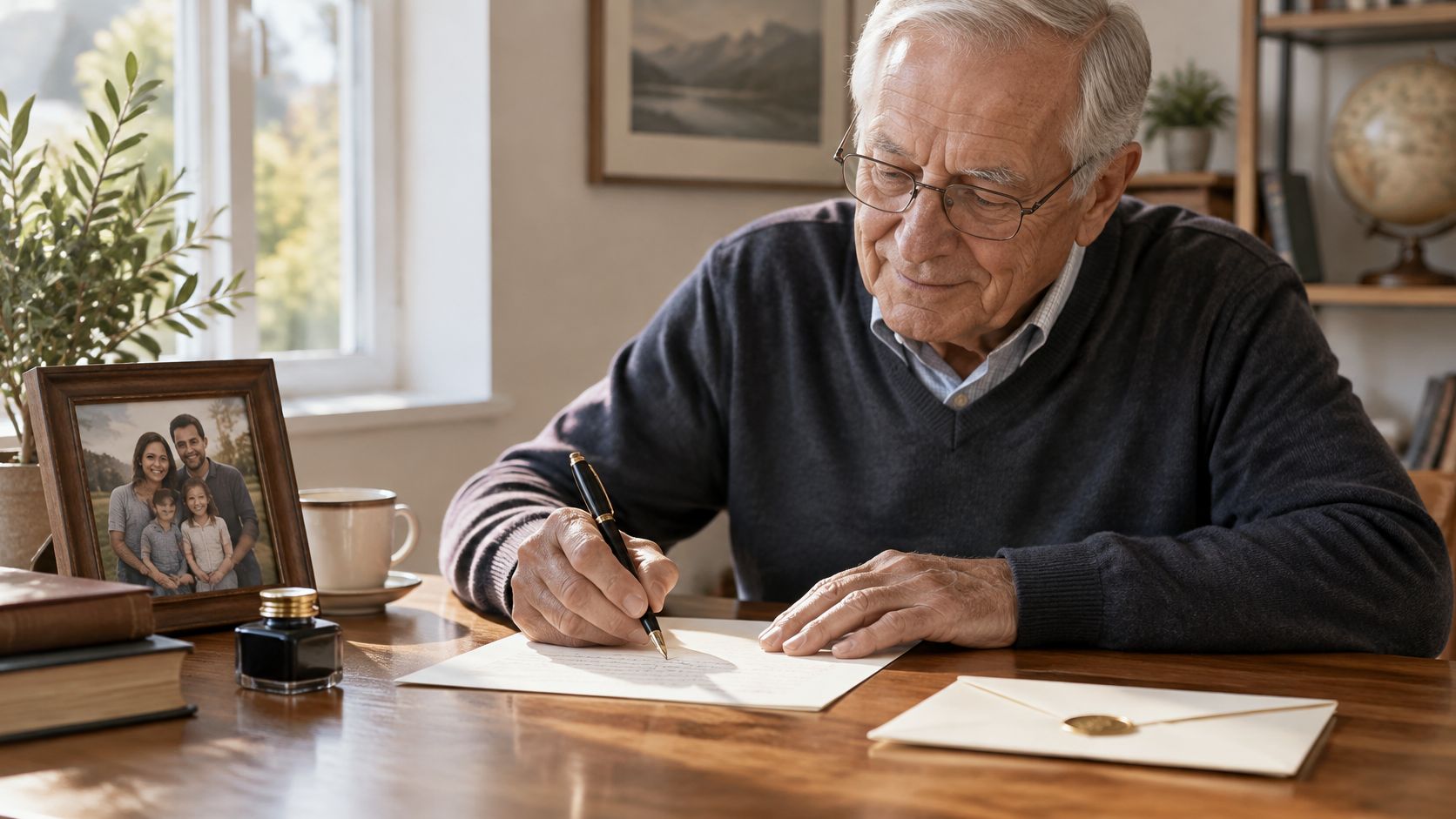
Begin with one piece of advice you wish you could give a younger relative, then tell the story that taught it to you. The scene might be a mistake, a difficult choice, or a moment when someone else's kindness changed your direction. A grandchild or other descendant may value a direct message, especially when it explains the experience behind the lesson.
Benjamin Franklin's Autobiography shares personal habits and lessons, while StoryCorps records conversations and life stories. A legacy letter doesn't have to follow your life in order. Give each lesson its own brief story, then say plainly what you hope the reader will remember.
Use one family photograph as your anchor. Write to the person in it, or to the relative who will inherit the story. Explain what the picture doesn't show: what happened before it was taken, who was missing, and what you learned afterward. You can also record yourself reading the letter so your family can keep the sound of your voice with the words.
For help shaping your message, see this guide to writing a legacy. Keep the lesson personal rather than universal. “This is what helped me” leaves room for your descendant to make their own choice.
How the ten memoir topics compare by purpose, focus, and difficulty
| Item | Best For | Core Focus | Main Challenge |
|---|---|---|---|
| Childhood Memories and Growing Up in a Specific Era | Preserving family memories of a particular time and place | Everyday childhood life and the era's culture | Avoiding nostalgia without a clear narrative |
| Family Heritage and Immigration Stories | Connecting descendants with family roots and traditions | Ancestral journeys, culture, and identity | Researching records and reconciling differing family accounts |
| Career and Professional Journey | Passing professional wisdom to younger generations | Career milestones, decisions, and lessons | Keeping the story personal rather than résumé-like |
| Love Story and Marriage | Sharing the story of a lasting partnership with family | How a relationship began, changed, and endured | Balancing privacy and multiple perspectives |
| Parenting and Grandparenting Reflections | Sharing family-life lessons across generations | Parenting, caregiving, and family relationships | Addressing sensitive or emotionally difficult details |
| Overcoming Adversity, Illness, or Loss | Offering perspective to family or readers facing hardship | A major challenge, coping, and personal growth | Revisiting painful experiences and protecting privacy |
| Travel and Adventure Memoir | Preserving meaningful journeys and their impact | Places, encounters, and personal transformation | Avoiding a travelogue without reflection |
| Military Service and Veterans' Stories | Preserving firsthand accounts of military service | Service experiences, camaraderie, and life after deployment | Revisiting difficult experiences and respecting disclosure limits |
| Faith and Spiritual Journey | Passing on beliefs, values, and spiritual experiences | Faith, doubt, practices, and meaning | Writing openly while respecting differing beliefs |
| Legacy Letters and Life Lessons (Ethical Will) | Sharing values and guidance with future generations | Personal lessons and hopes for descendants | Making advice concrete with personal stories |
Start With One Memory This Week
A memoir is built one scene at a time, not finished in a single sitting. You don't need to decide the final shape of the book before you write. Choose one topic from this list, set a photo or object beside your notebook, and write one page within seven days.
Keep the first page small enough to finish. Describe where the scene takes place, who is there, what happens, and what you understand now that you didn't understand then. If you can't remember a detail, mark the gap instead of guessing. You can check a photograph, a letter, a family record, or a relative's recollection later.
A first draft is easier to shape when it stays close to a moment. If you're looking for a model for building a scene around a clear detail, try this guide to crafting relatable anecdotes for essays. Bring that same attention to your own memory: one person, one place, one action, and the detail that still stays with you.
Invite a relative to add a single memory. Ask an open question such as, “What do you remember about that day?” Let them answer before you supply your version. Their recollection may fill a gap, add a different point of view, or raise a new question. Keep both accounts if they differ. Family stories don't need to match perfectly to be valuable.
If you're writing about a difficult experience, set your own pace and boundaries. You can write for family rather than publication, leave out private details, or stop after one page. A short, honest scene is a useful beginning, even if you're not ready to tell the whole story.
Then save the page with its anchor. Label the photograph or object, note who appears in it, and record any questions you still have. If you make an audio recording, say who's speaking and what scene you're describing. These small habits make the story easier for relatives to understand later.
A family memoir doesn't have to be a polished book to matter. It can be a set of pages, letters, photographs, and recorded conversations that help your family understand how you lived and what you valued. A platform like remembers.life can keep those materials together for your family to revisit. Start with the memory you can still picture, and let the next page wait until you're ready.
remembers.life helps you collect life stories, photos, and recordings in one place for your family. Start with one memoir topic and create a record your loved ones can return to at remembers.life.