10 Legacy Project Ideas for Families to Preserve
Explore 10 legacy project ideas for preserving family stories, recipes, photos, values, traditions, and memories for future generations.
A caregiver may have a box of photographs on the dining-room table, a loved one who remembers family stories in vivid detail, and no clear idea where to begin. Should you ask for a memoir, record a conversation, scan the photographs, or create a family archive? The choice can feel larger than the project itself.
The strongest legacy project isn't necessarily the most elaborate. It's the format a person can complete comfortably and the family can organize, access, and preserve. These legacy project ideas include voice recordings, handwritten memories, recipes, family history, photographs, cultural traditions, and personal values. Each serves a different purpose, so you can choose one that matches a person's energy, confidence, preferred format, and the family's future needs.
A practical workflow keeps the work manageable: choose a narrow scope, gather the material, add names and dates, obtain permission for sensitive content, and create organized backups. A personal record on remembers.life may also give families a place to bring written memories, photographs, recordings, and milestones together.
Table of Contents
- 1. Digital Video Memoir Recording
- 2. Handwritten Letter and Journal Archive
- 3. Oral History Interview Documentation
- 4. Family Recipe Collection and Cookbook
- 5. Genealogical Family Tree with Narrative Histories
- 6. Photo Documentary Archive with Captions
- 7. Life Lessons and Wisdom Compilation
- 8. Cultural Heritage Documentation
- 9. Life Timeline with Historical Context
- 10. Personal Ethics and Values Documentation
- 10 Legacy Project Ideas Comparison
- Start Small, Preserve What Matters
1. Digital Video Memoir Recording
A video memoir preserves more than a person's words. It also retains voice, facial expression, pauses, humor, and personality, which can help relatives experience a story as a living exchange rather than a formal biography. This format suits someone who enjoys talking and wants grandchildren or future family members to hear their account directly.
A caregiver might record a parent discussing childhood homes, military service, a first job, marriage, migration, or the family decisions that shaped later life. Projects such as StoryCorps and oral-history collections held by heritage organizations demonstrate how ordinary experiences can become meaningful historical records without requiring polished performance.
Keep each recording comfortable
Don't ask someone to tell their entire life story in one sitting. Choose one period or theme at a time, such as school years, working life, parenthood, or a particularly difficult transition. Prepare a few prompts, then let the speaker follow memories naturally.
A quiet room with soft, even light is usually more useful than an elaborate studio. Place the camera at eye level, reduce background noise, and test the sound before beginning.
- Use short sessions: Stop while the speaker still feels comfortable and interested.
- Invite a familiar interviewer: A child, grandchild, friend, or caregiver can encourage more natural storytelling.
- Name every file clearly: Use labels such as “Childhood,” “First Home,” or “Family Traditions.”
- Keep multiple copies: Store an organized primary copy with backups on separate storage systems.
For further guidance on planning and recording family stories, see this guide to preserving family memories through video.
Practical rule: Record the story the person wants to tell, not only the questions you prepared.
Before sharing any recording, discuss consent. A person may be comfortable preserving a private recording for close family but not publishing it publicly. Add dates, names, places, and a short description so relatives can understand the context years later.
2. Handwritten Letter and Journal Archive
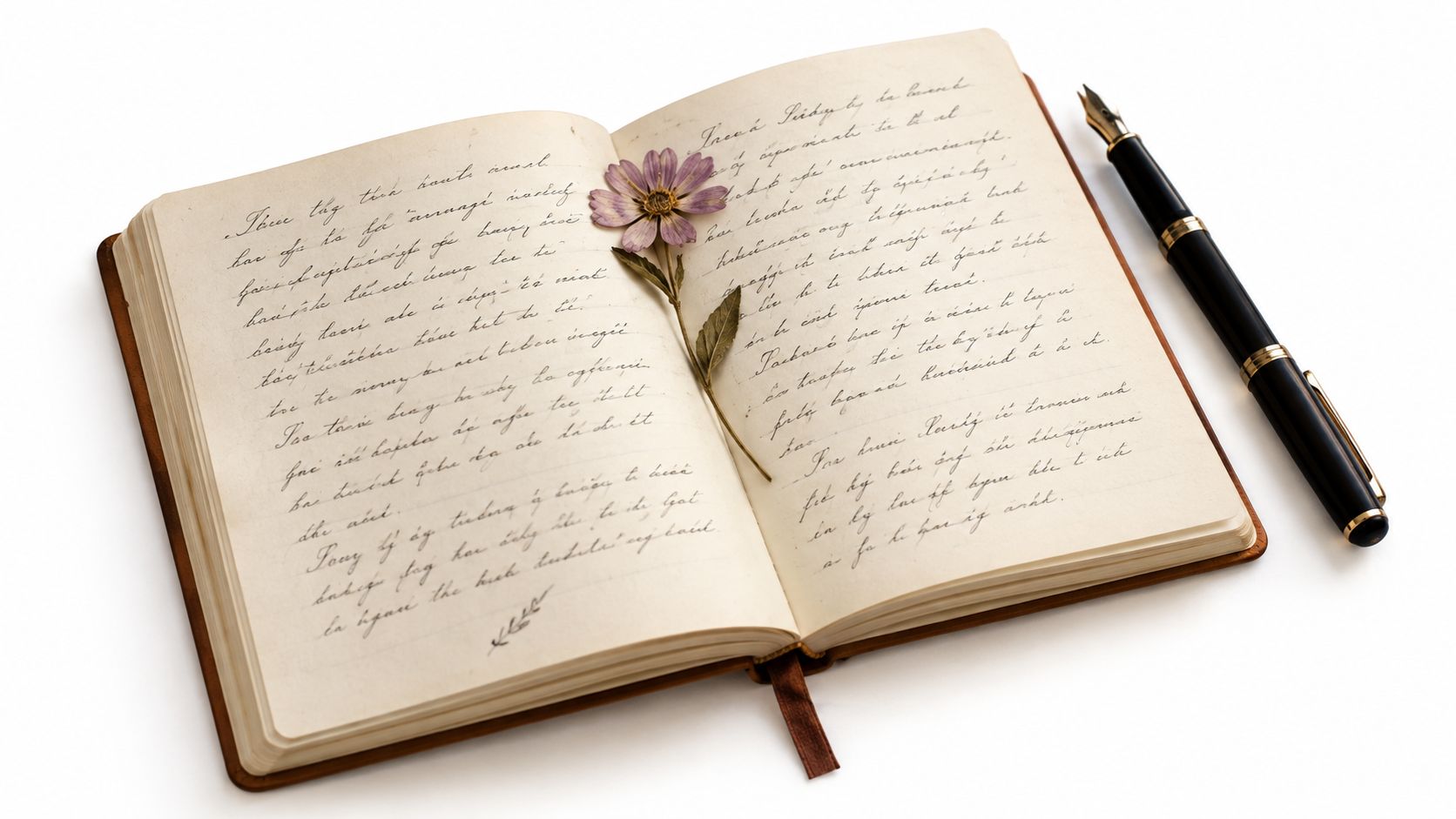
Some memories belong on paper. A handwritten letter preserves the shape of a person's writing, the pressure of the pen, corrections, and small details that a typed document can't reproduce. It can feel especially personal when addressed to a specific child, grandchild, partner, or future relative.
This project works well for someone who prefers quiet reflection to conversation. The writer might describe an important decision, a family hope, a difficult season, or an ordinary day that reveals how life felt at the time. A journal archive can also include older letters, recipe cards, postcards, school notes, and handwritten lists.
Preserve the paper and its meaning
Begin by deciding whether you're creating new material, organizing existing papers, or doing both. Each item should have a date, writer, recipient, and enough background to explain why it matters. If a letter refers to “the trip” or “your uncle,” add a separate note with the relevant details.
Use archival supplies when possible, keep papers away from moisture and direct sunlight, and avoid attaching damaging adhesives. Scan or photograph every important item, but don't treat the digital copy as a replacement for careful physical storage.
A simple index can list the document title, date, people mentioned, and storage location. That small guide may become essential when relatives need to find a particular letter without handling the whole collection.
For prompts and structure, this life story journal guide can help a writer move from scattered memories to a consistent archive.
A letter doesn't need to explain an entire life. One honest page about one meaningful moment can become a lasting family document.
3. Oral History Interview Documentation
A recorded conversation preserves voice: pauses, laughter, word choices, and the emotion behind a memory. This format fits someone who has much to share but feels uncomfortable writing or appearing on camera. A caregiver, relative, or friend can provide the structure while the speaker remains focused on remembering.
Start with one setting and one theme. A grandchild might ask a grandparent about the neighborhood where they grew up. “Tell me about the street where you spent your childhood” invites sounds, places, people, and feelings. Questions that seek only dates usually produce a thinner record.
Treat the interview like a guided walk through familiar ground. Prepare a few questions, then follow the speaker's details. If they mention a factory, school, community group, or family disagreement, ask what a normal day looked like there. A short pause can give them time to continue.
Choose a quiet room and test the audio before beginning. Separate conversations can focus on childhood, relationships, work, family traditions, or later reflections, so the speaker does not need to cover everything at once. Transcription helps relatives search the material and supports family members who cannot listen to a long recording.
Before recording, agree on how the files will be used.
- Ask for permission: Discuss who may hear, download, or share the recordings.
- Record introductions: State the speaker's name, the date, the interviewer, and the subject.
- Preserve uncertainty: Mark memories as recollections when dates or details are not verified.
- Organize by theme: Use clearly named folders and keep a backup in a separate location.
The archive should retain the original audio, any transcript, and notes identifying people or places. Begin with a conversation that feels comfortable, then add sessions as energy and interest allow. This family audio recording guide offers a practical starting point for capturing spoken memories.
4. Family Recipe Collection and Cookbook
A recipe card can preserve handwriting, while a tested cookbook preserves technique and family meaning. Together, they show who made a dish, when the family served it, and what the meal meant. This format suits someone who prefers demonstrating food to writing a long narrative.
Begin with one familiar dish. Ask the cook to prepare it while explaining substitutions, smells, textures, and the reason the family remembers it. A grandmother may measure flour by feel; a parent may recall a cake appearing at every birthday. Record those details first, then translate them into steps another cook can follow.
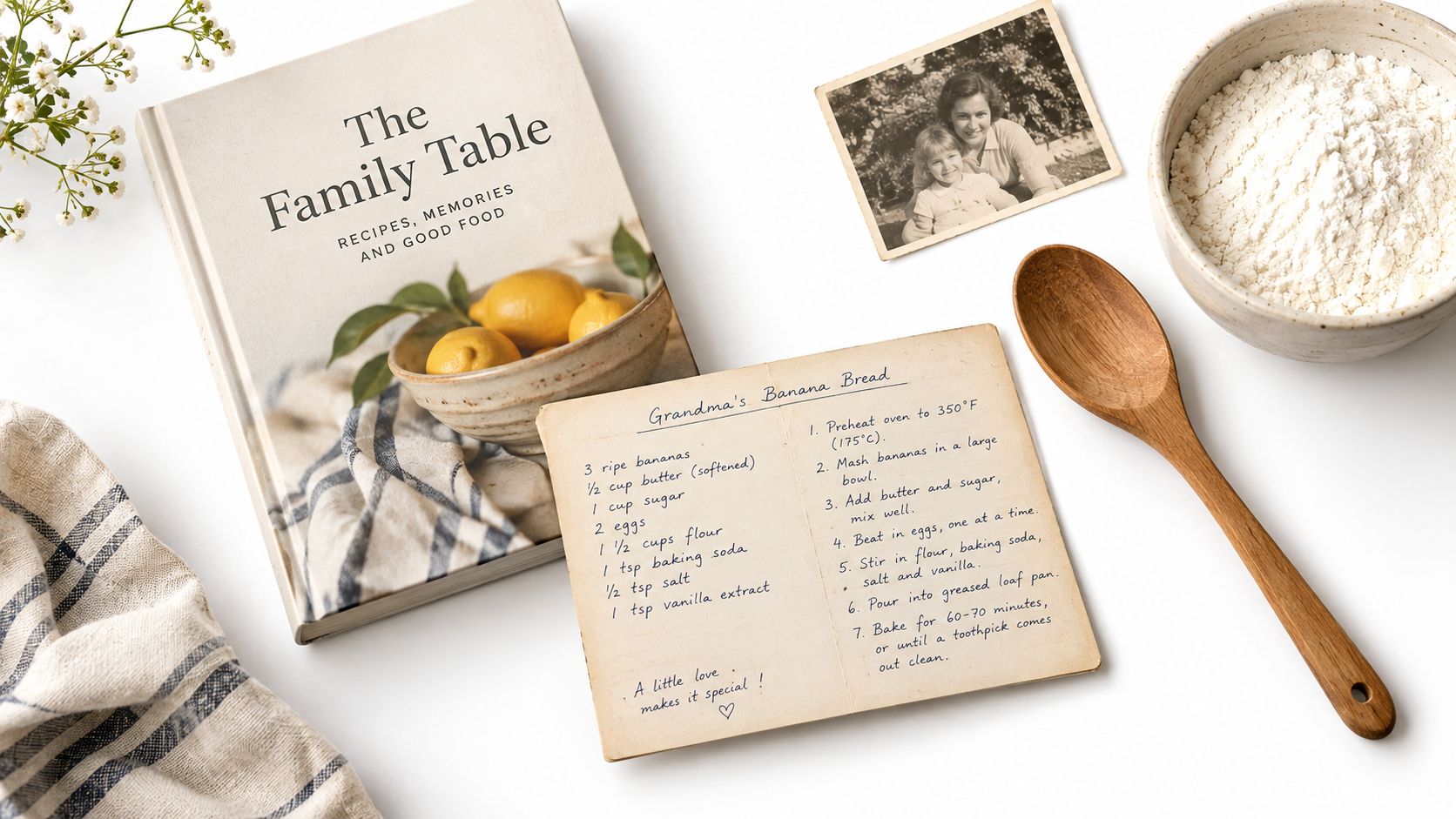
Cook each recipe while checking unclear amounts and unfamiliar methods. Replace “cook until ready” with visible or sensory cues, such as texture, color, smell, or timing. Explain any traditional pan, stove, grinding tool, serving custom, or ingredient substitution that affects the result.
A photograph can help identify the finished dish, but family value does not depend on perfect presentation. Leave room for later relatives to add variations, memories, and notes about occasions when the food was served.
- Capture the story: Ask where the recipe came from and who first prepared it.
- Preserve the original: Scan recipe cards before frequent handling causes damage.
- Create an index: Sort entries by meal, ingredient, celebration, or contributor.
- Share the work: Invite younger relatives to cook, photograph, transcribe, and format the collection.
Choose a format that matches the family's capacity. A small digital folder may be enough for a few recipes, while a printed book can offer a durable object for shared kitchens. Keep original scans, editable files, and a backup together, with clear filenames.
For help adding personal context to photographs or recipes, use this guide to what to write in a memory book. It can prompt stories about people, places, celebrations, and the feelings attached to each dish.
5. Genealogical Family Tree with Narrative Histories
A family tree becomes a legacy project when it moves beyond names and dates. The branches provide structure, while short biographies, photographs, documents, occupations, places, and remembered qualities help descendants understand the people behind the lines.
Start with what the family already knows. Gather birth records, marriage records, letters, obituaries, address books, and labeled photographs. Then speak with older relatives before their memories become harder to access. Separate documented information from family recollection, and note where details remain uncertain.
Give every person a human story
Use a consistent biography format so the archive remains easy to read. For each person, you might include full name, family relationships, places lived, work, interests, important events, and a short personal memory. A brief account of how someone treated others can communicate more than a list of achievements.
Historical context adds depth. A move may have followed a job closure, a marriage may have connected two communities, and a family business may have shaped daily life for decades. Context helps descendants understand choices without reducing people to dates.
Protect living relatives' privacy. Ask before sharing sensitive health, relationship, financial, or adoption information. Create a research guide that explains sources, unresolved questions, naming conventions, and where backups are stored. Future family members should be able to continue the work rather than start over.
A narrative tree can remain open to contributions. Relatives may add photographs, correct a date, attach a voice recording, or explain a family story from another perspective.
6. Photo Documentary Archive with Captions
A family photograph can preserve more than faces. With names, places, dates, and personal meaning, it becomes evidence of how people lived. This project fits someone who communicates through images, or a family with boxes of photographs waiting to become a usable archive.
Choose one small subject first, such as a holiday, home, decade, or one person's school years. Ask relatives to identify people and places while those memories remain accessible. Include ordinary scenes alongside formal portraits. A kitchen, workbench, garden, or familiar street may show daily routines, work, possessions, and community life more clearly than a posed picture.
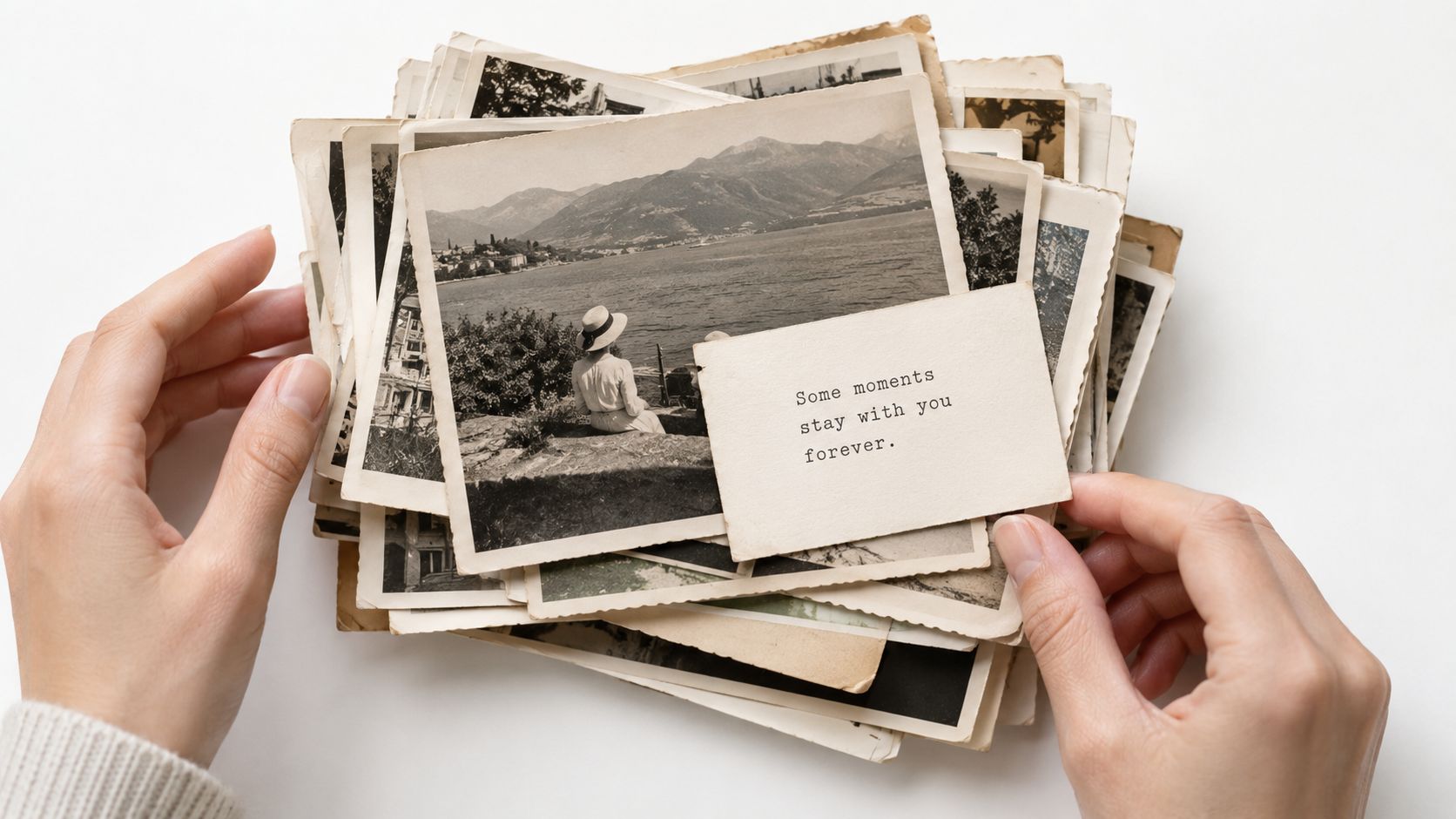
A caption is the bridge between an image and the family member who will view it later. Record the approximate date, location, names from left to right, event, photographer if known, and why the photograph matters. Where the date is uncertain, describe the evidence, such as “around the time of the move to Manchester,” rather than guessing.
Begin with a simple working system: scan fragile or irreplaceable photographs carefully, keep the original files, and use descriptive filenames. The archive might combine digital folders, a caption spreadsheet, and a physical album for relatives who prefer printed photographs.
- Choose preservation-friendly storage: Keep original photographs in a cool, dry place.
- Record multiple viewpoints: Ask more than one relative when an identification is uncertain.
- Add longer stories selectively: Give detailed narratives to images with particular family meaning.
- Review access: Mark which photographs are private and which can be shared more widely.
Finish with a short guide to the folder structure, filenames, and backup location. The archive should remain understandable even when its creator is no longer available to explain it.
7. Life Lessons and Wisdom Compilation
A grandchild facing a first job may need a story about an early mistake more than a polished autobiography. A life lessons and wisdom compilation preserves the reasoning behind advice about work, relationships, parenting, friendship, faith, health, mistakes, and purpose. It fits someone who prefers speaking or writing reflections rather than recounting every year of life.
Choose one question to begin: Which decision changed your direction? What did friendship teach you? How did you handle a difficult season? Answer with the event first, then the lesson. Instead of writing “choose your friends carefully,” describe the friendship, what you misunderstood, what happened, and what you would do differently. Those details give future readers something they can consider without treating the advice as a rule.
The collection might take the form of short notes, recorded conversations, or chapters grouped by theme. A person with limited energy can record one reflection at a time. A trusted relative can transcribe it, return the draft for approval, and preserve the speaker's wording.
Keep the writer human. Include failures, changed opinions, and circumstances that no longer resemble the present. Explain what worked for you, where it did not, and why another generation may choose differently.
Useful prompts include:
- Relationships: apologizing, listening, setting boundaries, and showing affection.
- Work: sources of meaning and lessons learned late.
- Difficult seasons: people, practices, or beliefs that helped you continue.
- Everyday judgment: approaches to money, responsibility, health, time, and uncertainty.
Write to real family members when possible. Save recordings alongside the approved text, label each reflection with its date and topic, and let future readers hear the familiar voice behind the advice.
8. Cultural Heritage Documentation
Cultural knowledge can disappear when only one or two people still know how to perform, explain, or name a tradition. A heritage project preserves language, celebrations, songs, ceremonies, craft, food, beliefs, and the reasons behind them. It can be especially meaningful for families whose traditions have changed through migration, marriage, or assimilation.
Begin with an elder who actively practices the tradition. Ask them to demonstrate the process and explain what each step means. Record pronunciation, alternate names, seasonal timing, materials, gestures, and the stories connected to the practice. Younger relatives can help with filming, transcription, translation, and respectful organization.
Preserve both practice and change
Don't present culture as frozen. Document how the tradition was practiced in an earlier home, how it changed after relocation, and what younger family members now retain or adapt. That history can be as important as the original procedure.
A project might document preparing a festival meal, greeting relatives in a heritage language, making a garment, observing a religious custom, or gathering for a seasonal celebration. Get consent from everyone who appears in recordings, and be careful with knowledge that a family or community considers private or restricted.
The Smithsonian Folklife Festival and UNESCO's work with intangible cultural heritage offer useful models for treating living traditions as knowledge carried by people, not merely objects displayed in storage.
This embedded video may help families think about how cultural practices can be recorded through demonstration and explanation.
Use clear file names, transcribe spoken language where appropriate, and store translations alongside original recordings. Invite younger relatives to add their understanding, questions, and future versions.
9. Life Timeline with Historical Context
A timeline gives scattered memories a visible shape. It can show where a person lived, who joined the family, what work they did, which challenges they faced, and how public events influenced private decisions.
Start with a simple working document rather than a designed graphic. List births, marriages, moves, jobs, schools, illnesses if the person wants them included, travels, family milestones, and meaningful changes. Leave uncertain dates marked for later review.
Connect personal moments to the wider world
Add brief context for each period. A move may have happened during an industry change, a new job may have followed a local closure, and a child's childhood may have included distinctive music, technology, or community events. The context shouldn't overwhelm the personal story. It should help descendants understand the world surrounding it.
Create two versions if necessary. A detailed archive can contain documents, photographs, and longer notes, while a shorter version can help relatives quickly understand the main arc of a life. Add the source or contributor for each major entry so future family members can distinguish records from memories.
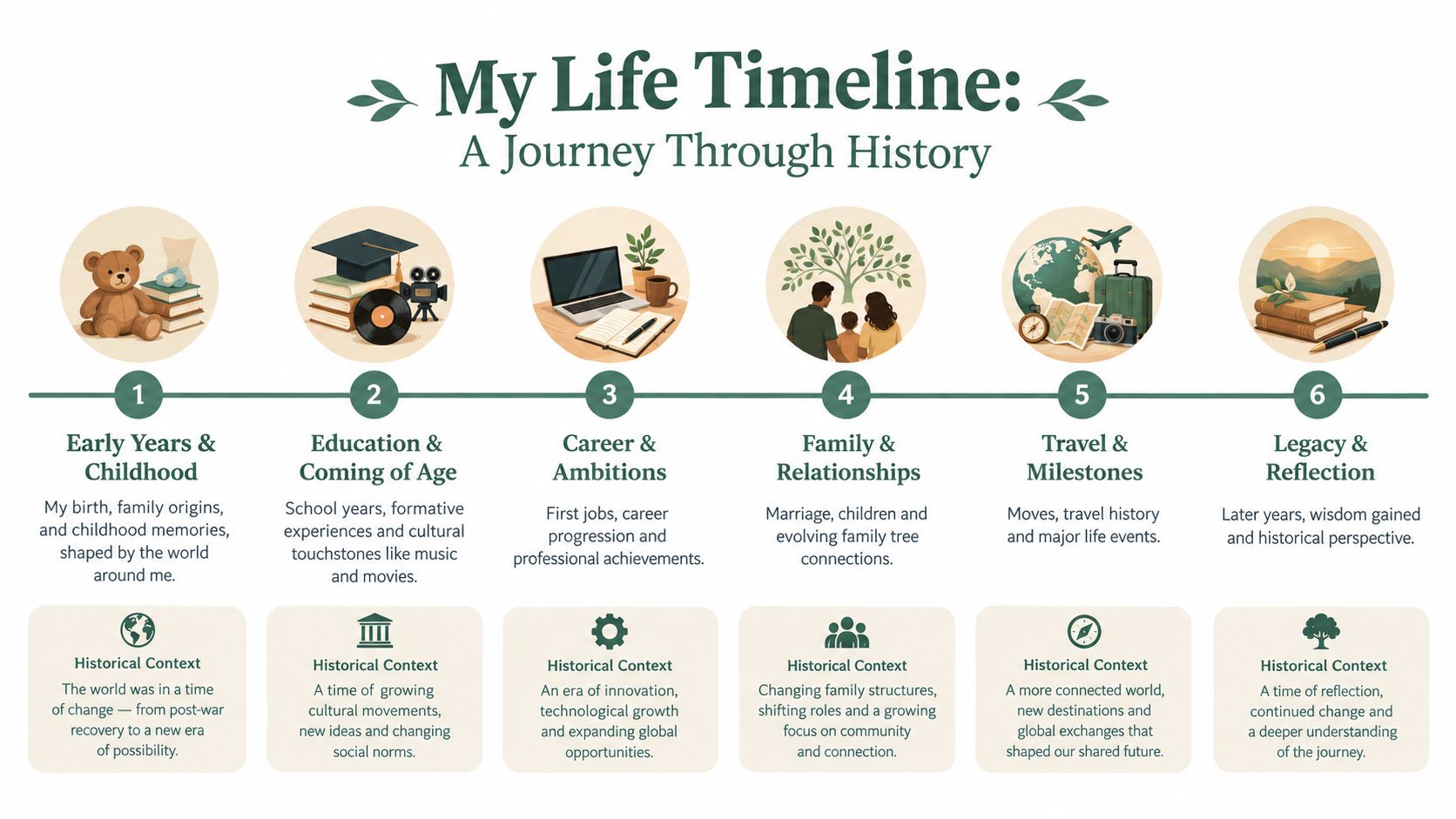
A timeline can also become collaborative. One person may remember a house, another may know the reason for a move, and a grandchild may add photographs from a later period. Review sensitive events with the person whose life is being documented, especially when the archive will be shared.
10. Personal Ethics and Values Documentation
A values document explains what a person tried to stand for and how those principles influenced real decisions. It differs from a legal document and doesn't replace estate planning or advance-care planning. Its purpose is personal clarity and family understanding.
Begin by listing values in plain language. Choose words such as kindness, independence, loyalty, faith, curiosity, fairness, responsibility, creativity, or service. For each one, explain where it came from, when it guided you, and when it was difficult to follow.
Show values under pressure
A value becomes memorable through a story. Describe a time when honesty cost you something, when loyalty conflicted with self-protection, or when compassion changed a decision. Acknowledge inconsistency where it exists. Future relatives may connect more strongly with an honest account of struggle than with a polished statement of moral perfection.
Write in an inviting tone. The document should share a perspective, not command descendants to live identically. Explain how values apply to family relationships, work, community, difficult decisions, and care for others. You may also describe how your views have changed and why that change matters.
Leave space for responses. Family members can write what they learned, where their values overlap, or how they interpret the same event differently. Those replies can become a second layer of the archive.
A values document can remain private for a long time. Decide who may read it, whether certain sections should be shared only with specific people, and how the document should be stored. Add a date to every revision so readers can see how reflection developed over time.
10 Legacy Project Ideas Comparison
| Item | Implementation (🔄) | Resources & Time (⚡) | Expected Outcomes (📊⭐) | Ideal Use Cases (💡) | Key Advantages (⭐) |
|---|---|---|---|---|---|
| Digital Video Memoir Recording | High complexity, multi-session recording & editing 🔄 | Camera/mic, editing software, cloud backup; time‑intensive ⚡ | High emotional fidelity and engagement; strong sensory record 📊⭐ | Storytellers, tech‑comfortable elders wanting vivid legacy 💡 | Captures tone/emotion and personality; highly engaging ⭐ |
| Handwritten Letter and Journal Archive | Moderate, sustained writing and archival organization 🔄 | Low tech (paper, archival supplies), scanning for backup; moderate time ⚡ | Tangible, intimate keepsake preserving handwriting and voice 📊⭐ | Reflective writers; those who prefer tactile legacy projects 💡 | Authentic penmanship; therapeutic process; low tech barrier ⭐ |
| Oral History Interview Documentation | Medium–high, interviewer prep and structured sessions 🔄 | Audio/video gear, transcription, facilitator; often many hours ⚡ | Comprehensive oral archive with contextual detail and voice 📊⭐ | People comfortable speaking; those with historical or rich life experiences 💡 | Guided coverage and conversational authenticity; follow‑ups possible ⭐ |
| Family Recipe Collection and Cookbook | Moderate, gather, test, and design recipes 🔄 | Recipe testing, photos, layout, possible printing costs; collaborative time ⚡ | Practical, usable legacy that preserves culinary traditions 📊⭐ | Home cooks; families focused on food heritage and shared meals 💡 | Usable heirloom that encourages intergenerational activity ⭐ |
| Genealogical Family Tree with Narrative Histories | High, extensive research, verification, and organization 🔄 | Records access, subscriptions, document scanning, long research hours ⚡ | Rich contextual family history linking people, photos, and stories 📊⭐ | Genealogy enthusiasts and large multi‑generational families 💡 | Comprehensive, updateable record that connects generations ⭐ |
| Photo Documentary Archive with Captions | Moderate, curation, captioning, and indexing 🔄 | Scanning/repair services, storage, metadata tagging; moderate time ⚡ | Visual, accessible legacy that preserves moments with context 📊⭐ | Visual storytellers and families with extensive photo collections 💡 | Universal appeal; prevents orphaned photos; highly shareable ⭐ |
| Life Lessons and Wisdom Compilation | Low–moderate, reflective writing and organization 🔄 | Minimal tech, focused reflection time; relatively quick to compile ⚡ | Practical guidance and mentorship preserved for descendants 📊⭐ | Mentors, reflective elders wanting to pass on principles 💡 | Straightforward to produce; offers actionable guidance ⭐ |
| Cultural Heritage Documentation | High, careful documentation, sensitivity, and expertise 🔄 | Interviews, recordings, language guides, multimedia; coordinating elders ⚡ | Preserves traditions, language, and identity for future generations 📊⭐ | Immigrant families, culturally distinct communities, heritage keepers 💡 | Safeguards cultural practices and educates descendants ⭐ |
| Life Timeline with Historical Context | Medium, research and visual design work 🔄 | Historical research, documents, design/infographic tools; moderate time ⚡ | Clear visual narrative linking personal milestones to history 📊⭐ | Visual learners and history enthusiasts seeking context 💡 | Shows personal life within broader historical framework; easy to follow ⭐ |
| Personal Ethics and Values Documentation | Low–moderate, deep reflection and clear writing 🔄 | Minimal resources; time for introspection and drafting ⚡ | Clarifies moral compass and offers guidance in decision‑making 📊⭐ | Thoughtful individuals wanting to transmit core values to family 💡 | Documents principles that guide family conversations and choices ⭐ |
Start Small, Preserve What Matters
The best first step is usually concrete and limited. Record one short memory, label a small group of photographs, write one letter, document one recipe, or outline one family tradition. Choose the format that feels natural to the person creating it. Someone who dislikes writing may speak into a phone, while someone who values privacy may prefer a handwritten page.
Define the intended audience before gathering sensitive material. A letter for one grandchild can be intimate, while a family archive may need broader context and clearer permissions. Ask whether people shown in photographs or recordings agree to be included, and explain who will have access.
Dates and context make every format more useful. Add the speaker's name and recording date, identify people in photographs, explain recipe measurements, note the source of family-tree information, and label memories that remain uncertain. Future relatives shouldn't have to guess who created an item or why it was important.
Digital preservation requires practical stewardship. The archival guidance in the Canadian older-adult digital-legacy research recommends keeping three copies on two types of media, with one copy stored off-site, alongside annual checks that files still open, as described in this archival preservation guide. The same source describes older adults using email, cloud storage, and social media while often lacking formal digital-legacy plans, which makes clear organization and succession instructions especially valuable.
The wider planning gap is substantial. One U.S. survey reported that 56% of adults had none of the five core estate-planning documents it tracked, while 26% had a will and 14% had a trust in that survey's findings, available through this estate-planning report. Pew has also reported that 32% of U.S. adults had created a will and 31% had created a living will or advance directive, with usage rising among older age groups, according to its cited findings in the same report. Legal documents matter, but they don't preserve the sound of a laugh, the story behind a photograph, or the method behind a family recipe.
Digital inheritance needs attention too. A 2026 UK survey reported that only 10% of adults had a plan for who would inherit digital assets, falling to 5% among people aged 55 and over, as summarized by this report on digital-asset inheritance planning. That gap supports a combined approach, preserve the emotional story while also recording permissions, account information, file locations, and the people authorized to manage the archive.
A legacy doesn't have to arrive as a finished book. It can grow in layers, one recording followed by a caption, one recipe followed by a family contribution, or one timeline entry followed by a document. A platform such as remembers.life can serve as one destination for a personal record that brings together names, photographs, written memories, milestones, video clips, and voice recordings, while a family room can allow relatives to contribute to connected profiles.
Choose the project that makes continued participation easiest. Then schedule a small session, tell one story, and preserve that first piece before asking the family to do more.
Visit remembers.life to create a personal record with timelines, stories, photos, video clips, and voice recordings. Invite relatives to contribute their own memories, and start preserving one meaningful part of your family's story today.