10 Story Ideas Prompts for Older Adults and Families
Discover 10 story ideas prompts for life stories, memory triggers, and family legacy writing, with practical steps for each one.
A grandparent sits at the kitchen table, a blank page in front of them and a shoebox of photographs within reach. Someone has asked for “a memoir,” but that request is so large it stops the story before it starts. People can recall a kitchen, a first job, a family argument, or the sound of a particular front door without much effort. They freeze when they're asked to turn an entire life into a book.
A focused prompt changes the task. Instead of writing everything, the storyteller describes one smell, one object, one photograph, or one decision. The ten story ideas prompts below are designed as small, finished exercises. Each includes a time limit, a sample opening line, and a preservation step, so a family member can create something useful in a single sitting and keep it for later.
Table of Contents
- 1. Sensory Memory Prompt
- 2. Object Story Prompt
- 3. Where I'm From Prompt
- 4. Turning Point Prompt
- 5. Oral History Interview Prompt
- 6. Ethical Will Prompt
- 7. Photograph Story Prompt
- 8. Family Recipe and Tradition Prompt
- 9. Letter to the Future Prompt
- 10. I Remember Prompt
- 10-Item Story Prompt Comparison
- Start With One Prompt This Week
1. Sensory Memory Prompt
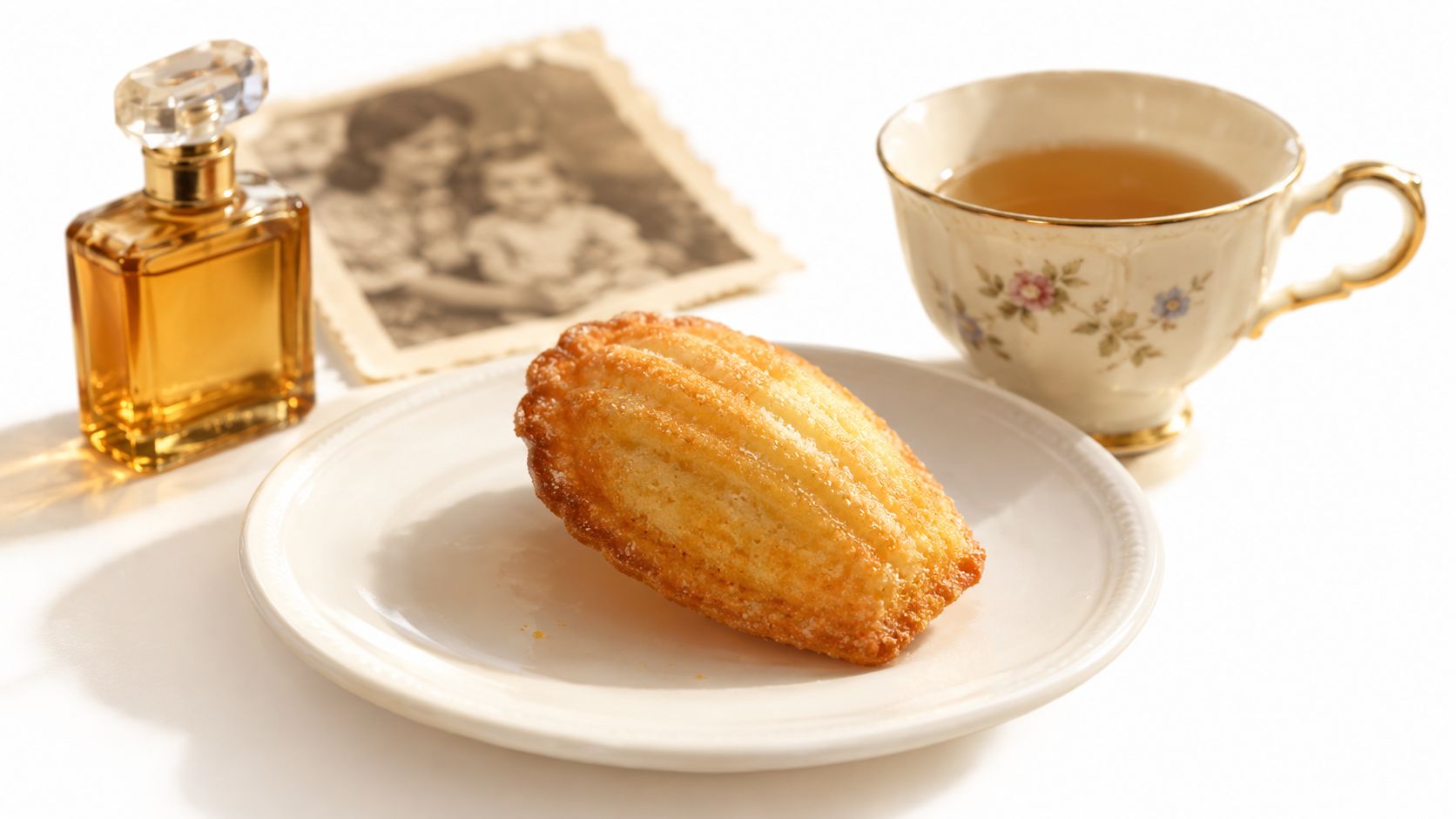
A smell or sound can open a memory faster than a broad question about childhood. Marcel Proust's madeleine episode in Swann's Way remains a familiar literary example of involuntary memory, but you don't need a famous pastry. A spice tin, wool coat, perfume bottle, postcard, or old tool can do the work.
Place one real object beside you and write for 10 minutes without stopping. Begin with:
“The first thing I remember about this smell, taste, sound, or texture is…”
Stay with the physical details before explaining the meaning. What did the room smell like? Was a radio playing? Who was nearby? What did your hands touch? A concrete sensory cue can make recall easier than an abstract instruction. Research on picture and text prompts found stronger performance with picture prompts than with text alone, supporting the practical value of giving memory something specific to hold onto. The ERIC-indexed study on prompt design provides useful context for this approach.
Finish with two sentences: what the memory meant to you then, and what it means now. A kitchen memory might reveal a parent's routine, a season of scarcity, or the comfort of being expected home for dinner. For more starting points, see these memoir writing prompts.
Preserve the result by photographing or scanning the object, then placing the image beside the written memory. If the object is small and safe to keep, label it with the storyteller's name, the approximate date, and the story's title.
2. Object Story Prompt
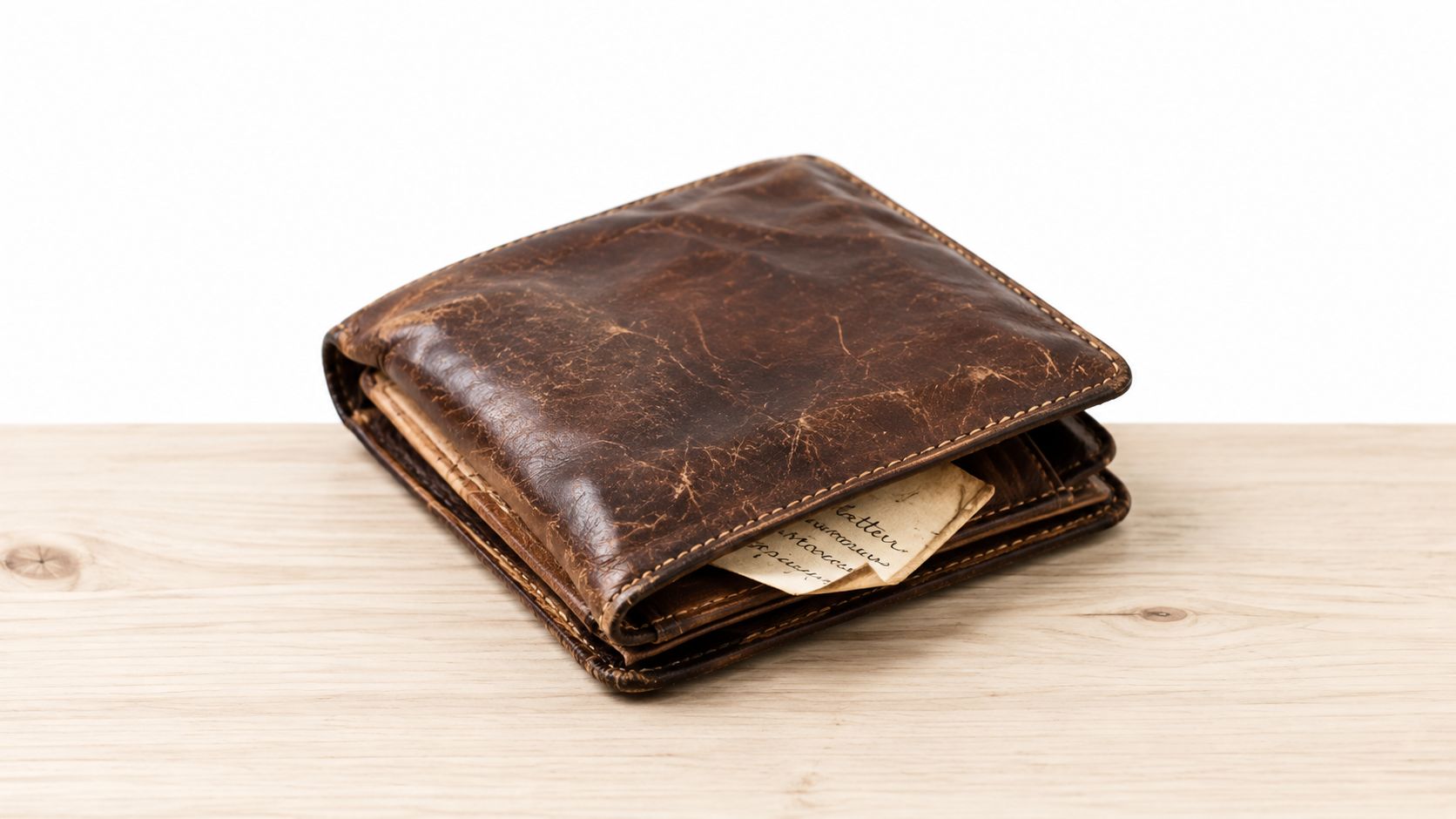
Choose an everyday object that has been used, not merely displayed. A leather wallet, sewing machine, work badge, wedding ring, lunch tin, or gardening tool often carries more personal history than an expensive heirloom because it has stayed close to ordinary life.
Set a timer for 12 minutes. Put the object in front of you and open with:
“This came into my life when…”
Then answer these questions in order:
- Where did it come from? Name the shop, person, workplace, journey, or occasion if you remember.
- Who used it? Explain whether one person owned it or whether it moved through the family.
- What happened near it? Place it in a specific scene.
- Why does it matter now? Separate sentimental value from financial value.
The BBC Radio 4 and British Museum project A History of the World in 100 Objects showed how a single object can lead into a much larger human history. The same method works at family scale. A wallet might reveal a first pay packet, a move to a new city, or the person who gave it as a gift.
Record a short audio description after writing. Hearing the storyteller explain the object adds tone and personality that a label can't capture. Then attach a card stating the object's name, the approximate date, the owner, and the storyteller's name. Keep the card with the item rather than in a separate box.
3. Where I'm From Prompt
A family's roots often appear in small details rather than official records. George Ella Lyon's “Where I'm From” form gives writers a repeated opening and asks them to gather names, sayings, foods, places, objects, and household details. It works well for people who say they aren't writers because the structure makes the first move simple.
Give yourself 15 minutes. Start every line with:
“I am from…”
Begin with bullet points before shaping them into lines. Include one family saying, one food, one place, one object, and one sound. “I am from the blue enamel pot” will usually lead somewhere more memorable than “I am from a loving family.” Specificity gives relatives something they can recognize, correct, or add to.
Build a shared family version
Ask each parent, grandparent, or sibling to write a separate version. Don't merge the answers too quickly. One person may remember a narrow street, another a farm path, and another a language spoken only by older relatives. The differences show how family identity is experienced rather than handed down as one official account.
Read the finished piece aloud and record it. The repeated phrase creates a rhythm that can disappear on the page. A spoken version may also work better for an older adult who dislikes typing or has limited vision.
Preserve the work in two forms. Save the typed version in a family archive, then keep the audio recording with it under the same file name. Add the writer's name and the date of recording so future relatives know whose voice they're hearing.
4. Turning Point Prompt
A quiet decision can divide a life into “before” and “after.” A job offer, move, marriage, divorce, diagnosis, missed opportunity, or choice to stay may change what comes next. The story becomes clearer when you describe both the event and what you understood about it later.
Give yourself 15 minutes. Start with:
“The day everything changed was…”
Write the scene as you experienced it then. Record the room, people, words, and immediate choice before explaining the outcome. Then add a second passage from the present. What did you fear? What did you expect? Which consequence surprised you? A move may have felt like a loss before it became the place where lasting friendships formed. A missed opportunity may have redirected your work.
The study on prompts and historical reasoning offers a useful model for examining memory. Ask four questions: What happened? What did I believe then? Which details do I still remember? How do I interpret the event now? Separating the original view from later understanding helps you avoid turning hindsight into certainty.
Protect the storyteller's control: Write only what you're ready to share. Keep a private version if the public version needs to be shorter or gentler.
End with one sentence about what the change gave you, taught you, or took from you. Type the piece, then scan the handwritten page or record yourself reading it aloud. Save both files together, and label names or details that should remain private. This leaves you with a finished account and a clear record of how you remember the turning point.
5. Oral History Interview Prompt
Some people tell a story naturally when another person asks a good question. They may struggle with a blank page but become vivid when describing a normal day at work, the house they grew up in, or the first journey they took alone. An oral history interview uses conversation to capture words, pauses, laughter, accent, and tone.
Prepare 10 to 15 open questions and schedule a 30 to 45 minute recording session. Start with:
“What was a typical day like when you were my age?”
Follow the answer with questions that keep the person in the scene:
- Ask what happened next: Encourage sequence rather than summary.
- Ask who was there: Names and relationships help future listeners place people.
- Ask about the setting: Invite details about rooms, streets, workplaces, weather, and clothing.
- Ask how it felt: Emotional meaning often appears after the factual account.
Don't interrupt every pause. Give the storyteller time to search for a detail, and don't correct a date in the middle of a story. Note uncertain facts afterward and label them as memories rather than verified records.
A 2021 systematic review of digital storytelling with older adults found that one-to-one interactions were the most common format, appearing in 45.9% of 37 studies, while co-created storytelling appeared in 72.9% of 37 studies. The review identified memory, reminiscence, identity, and self-confidence as frequent objectives but cautioned that the overall evidence for effectiveness remained low. The systematic review of digital storytelling supports treating the interview as a relational activity, not a test.
Save the audio in two places and transcribe the most important sections. You can find additional preparation ideas in this oral history interview guide.
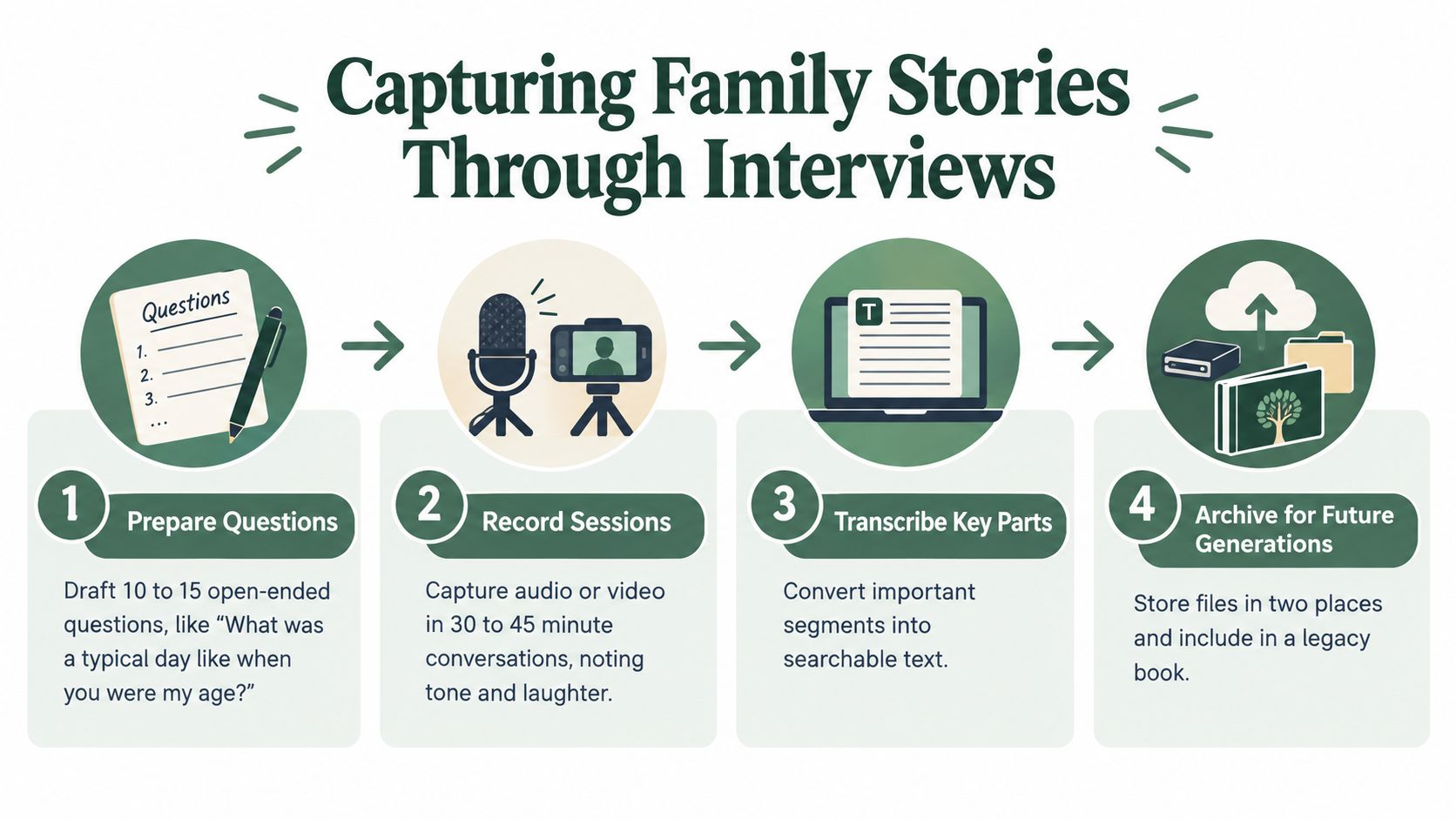
A short visual explanation can help an interviewer feel comfortable with the process:
6. Ethical Will Prompt
An ethical will passes on values, gratitude, hopes, apologies, and wisdom rather than property. It can be addressed to the whole family or written separately for a child, grandchild, sibling, or close friend. The writing becomes stronger when each value is connected to a lived example.
Allow 20 minutes. Begin with:
“These are the values I hope you carry forward…”
List five values first. Then give one brief example for each. A value such as patience becomes meaningful when attached to a difficult workplace, a long caregiving period, or a decision to listen before responding. Include one regret, one apology if appropriate, and one expression of gratitude to someone who shaped your life.
The writer doesn't need to sound wise in every sentence. A sincere admission of uncertainty may teach more than a polished rule. Keep the letter personal and avoid turning it into instructions for how relatives should live.
For a practical framework, use this guide to writing a legacy, then adapt the language to your family's beliefs and relationships. Ethical wills have appeared in many forms, including blessings and letters shared with relatives. Their value comes from clarity and personal detail, not from a formal structure.
Preserve the finished letter by storing a copy with important documents and telling at least one trusted family member where it is kept. You can also record yourself reading it aloud. If you write separate letters, label each file with the recipient's name and the date.
For another perspective on legacy writing, see this guide to crafting your legacy.
7. Photograph Story Prompt
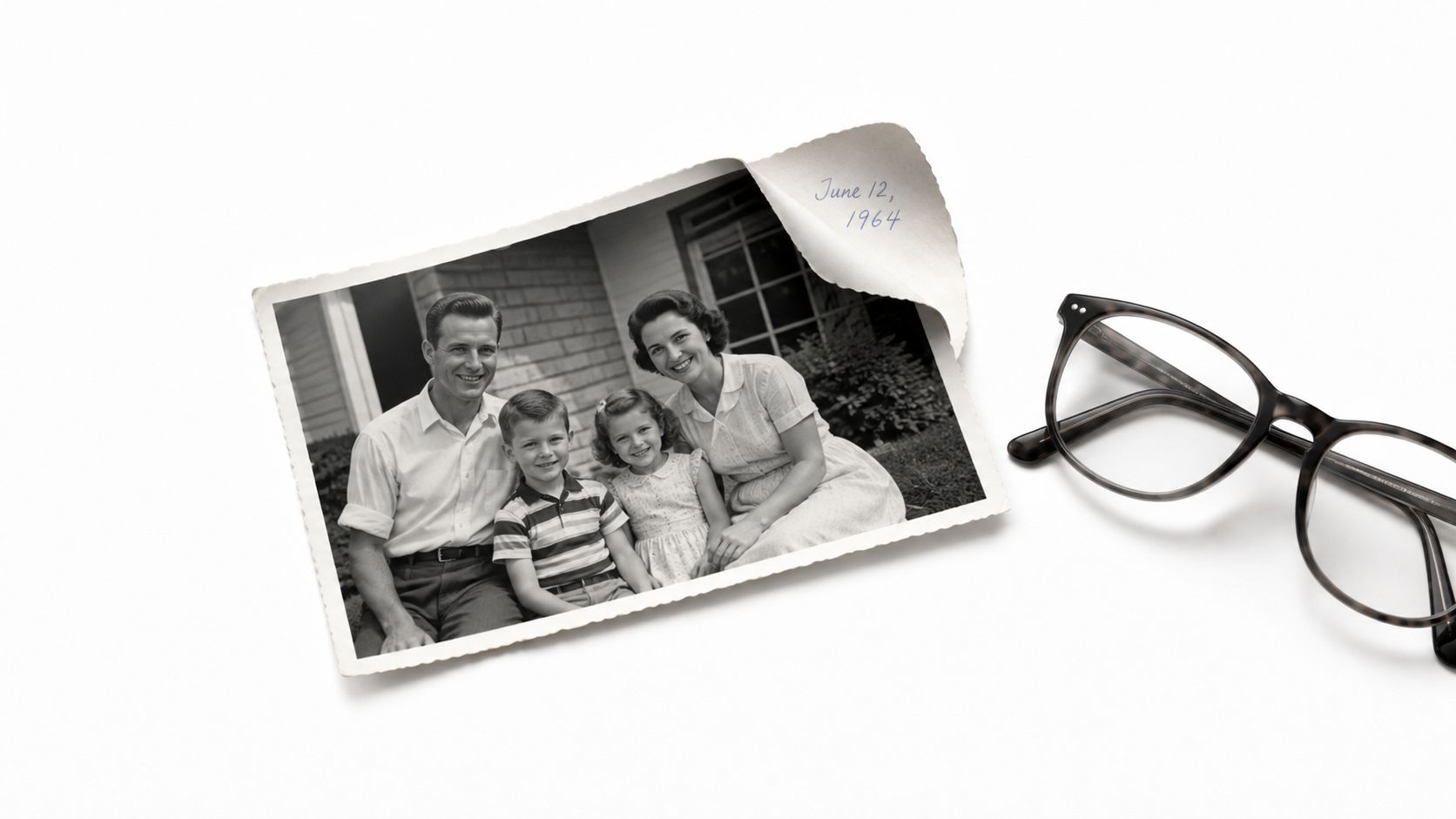
A photograph freezes one second, but the family story usually lives outside the frame. Choose one image and give yourself 15 minutes to describe what happened before and after it was taken. Begin with:
“Just before this photograph, we had…”
Name every person you can identify, even if you're unsure of the spelling. Record the place, the approximate date, the photographer, and the event. Then move beyond identification. What had someone said? Who was missing? What was the mood? What did the people in the image not know yet?
The photo may show a birthday, but the surrounding account could reveal a new job, an illness, a strained relationship, or the first visit to a new home. A family image becomes more useful when it carries context instead of only names.
Preserve the original before writing
Scan the photograph before adding notes or handling it repeatedly. Store the original safely, keep a backup of the digital file, and write the story in a separate document rather than directly on the image. Organizing photographs by decade or event can help a series of short accounts form a chronological record. This family photo organization guide can help you create a consistent system.
Add a caption with the names, place, date, and photographer if known. If the date is uncertain, say “approximately” rather than presenting a guess as fact. Keep different family members' identifications when they disagree. A conflicting memory is still part of the photograph's history.
8. Family Recipe and Tradition Prompt
A recipe preserves more than ingredients. It can carry a person's working rhythm, a religious observance, a migration story, a holiday argument, or the memory of who was allowed to stand near the stove. Choose a dish, celebration, greeting, gardening habit, or household ritual and set aside 20 minutes.
Open with:
“We made this when…”
Write the recipe as it is prepared. Keep phrases such as “a handful,” “until it smells right,” or “just enough to cover the pan” if those are the instructions the family uses. Ask who taught the tradition, where the ingredients or materials came from, what went wrong in the past, and how the practice has changed.
A conversation while cooking often produces better detail than an interview at a table. Ask someone to record the cook explaining each step. The recording may capture the pause before an ingredient is added, the reason a particular pan matters, or the story of a relative who first prepared the dish.
“The imperfect instruction is often the family evidence. Don't replace every handful with a measurement if the original way of cooking is part of the story.”
Preserve the result with a photograph of the finished dish or ritual. Save the audio recording, type the recipe clearly, and add a note naming the teacher, place of origin, and changes made over time. If several relatives prepare the same dish differently, keep each version instead of choosing one as the official account.
9. Letter to the Future Prompt
A letter becomes more revealing when it describes an ordinary day rather than trying to predict history. Choose a specific reader, such as a grandchild, great-grandchild, or relative you expect to meet years from now. Give yourself 20 minutes and begin:
“Dear [name], you may not know me, but…”
Describe where you are writing, who lives nearby, what a normal morning looks like, and what your family does together. List five things that seem ordinary now but might surprise the reader later. These could include the way people communicate, a local shop, a household routine, or the way a journey is made.
Then answer three personal questions. What do you hope this reader understands about your time? What do you hope their life includes? What do you want them to know about you that a photograph or family tree won't show?
Don't turn the letter into a list of predictions. The future reader needs your perspective, not certainty. Include a photograph, printed news item, recipe card, or local map to give the letter physical context.
Preserve it in an envelope with the recipient's name, the writer's name, the date, and the intended opening date. Store it somewhere the family can locate, such as with important papers, and tell a trusted person about it. Save a scanned copy separately so the message isn't lost if the paper deteriorates.
10. I Remember Prompt
Small memories often create the clearest portrait of a life. Joe Brainard's I Remember used repeated lines to build a book from brief recollections, and Georges Perec adapted the form in Je me souviens. The structure removes the pressure to explain everything.
Set a timer for 10 minutes and write as many lines as you can. Begin every line with:
“I remember…”
Keep moving. Write about a brand of soap, a street name, a phrase someone used, a bus route, a school lunch, the price of a treat, or the sound of a neighbour's gate. Don't edit while the timer is running. A detail that seems unimportant may become the line a relative recognizes years later.
Return to the list after a week and choose three entries to expand. Give each one a setting, another person, and one consequence. You can arrange the finished lines by decade, household, workplace, or family member. The format also works well for a reunion, where each person reads a different list and compares what they remember.
Preserve the original list as well as the expanded pieces. Scan handwritten pages, record the writer reading the lines, and label the files with the name and date. If the memories become part of a memorial or family tribute, a collection of these specific details can add warmth without reducing a person's life to general praise. These tribute stories for an obituary offer a related example of how individual details can carry affection and identity.
10-Item Story Prompt Comparison
| Prompt | 🔄 Implementation complexity | ⚡ Resource requirements | ⭐ Expected effectiveness | 📊 Expected outcomes & key advantages | 💡 Ideal use cases / quick tip |
|---|---|---|---|---|---|
| Sensory Memory Prompt (The Proust Madeleine) | Low–Medium, simple start, loose structure | Object or scent; 10–20 min | ⭐⭐⭐⭐ | Vivid, textured vignettes that evoke strong sensory detail | Pair with the real object; close with what the memory means |
| Object Story Prompt (A Life in Objects) | Medium, needs contextual research & reflection | Tangible item; photo; short recording optional | ⭐⭐⭐⭐ | Concrete, anchored histories that preserve heirloom meaning | Choose an often-handled object; answer origin/use/why it matters |
| Where I'm From Prompt | Low, highly structured template | None; 20–30 min | ⭐⭐⭐⭐ | Compact heritage statements good for sharing and collections | Fill bullet lists first, then convert to lines; record aloud |
| Turning Point Prompt (Crossroads Stories) | Medium–High, requires reflection and structure | Time for reflection; private notes recommended | ⭐⭐⭐⭐ | Deep insight into motives and consequences; memoir scaffolding | Start with “The day everything changed was…”; set boundaries |
| Oral History Interview Prompt | High, interviewer skill + editing/transcription | Interviewer, recorder, quiet space, transcription time | ⭐⭐⭐⭐⭐ | Rich audio/video capture of voice and interaction; multigenerational value | Prepare 10–15 open questions; record 30–45 min sessions |
| Ethical Will Prompt (Letters of Values and Wisdom) | Medium, summative, tone-sensitive | Time to reflect; optional drafting per recipient | ⭐⭐⭐⭐ | Clear, intentional transmission of values and requests | List five values with examples; store with important documents |
| Photograph Story Prompt | Low–Medium, guided questions keep focus | Photograph (scanned), 15–30 min | ⭐⭐⭐⭐ | Contextualizes photos, identifies people, enhances archives | Scan first; ask what happened before/after and who took it |
| Family Recipe & Tradition Prompt | Medium, procedural plus narrative | Kitchen/time to cook; photos or audio helpful | ⭐⭐⭐⭐ | Preserves practical knowledge and cultural rituals | Cook while recording; note measures like “a handful” |
| Letter to the Future Prompt | Low, straightforward, personal | Pen/paper or digital; optional photo or clipping | ⭐⭐⭐ | Snapshot of present day and hopes for descendants | Address a named future reader; list five ordinary-but-telling details |
| I Remember Prompt | Very Low, list-based, fast warm-up | Timer (10 min) | ⭐⭐⭐ | Rapid collection of specific details; great warm-up material | Sprint-write “I remember…” lines; expand selected entries later |
Start With One Prompt This Week
Don't wait until you have a complete family tree, a quiet weekend, or a perfect writing plan. Choose the prompt that matches something already within reach. If a photograph is on the table, use the photograph prompt. If a recipe is being prepared, record the recipe story. If a relative is willing to talk but dislikes writing, arrange an oral history conversation instead.
Set a 20-minute timer and make the task smaller than your resistance. You don't need to finish a chapter. You need one scene, one object, one letter, or one page of remembered details. A prompt works because it gives the mind a boundary. It tells the storyteller where to begin and where to stop.
Use a concrete cue whenever possible. A picture, sound, object, place, or food gives memory a point of contact. Research on prompting supports this practical choice. The 2024 study of historical reasoning also shows why follow-up questions matter. Asking what happened, what the person believed then, what evidence they recall, and how they interpret the event now produces a richer account than asking only for a date or name. The peer-reviewed prompt study provides a useful foundation for this evidence-aware approach.
Emotional safety matters as much as detail. Family histories can include silence, estrangement, trauma, cultural taboos, migration, and conflicting memories. A 2025 interdisciplinary review identifies culture and silence as unresolved issues in family storytelling and treats storytelling as a family and developmental process, not merely a writing exercise. The review of culture and silence in family storytelling supports offering permission to skip a question, change the subject, or focus on an object and routine instead of a painful event.
Accessibility also changes who gets included. A prompt should work as a spoken question, a large-print card, a phone recording, or a short conversation. Recent research on older-adult digital literacy reports that many participants prefer device-specific guidance in printed form, with diagrams and community support, before moving fully into digital learning. A 2025 National Science Foundation-backed project on intergenerational digital storytelling received a $661,478 grant and emphasized accessibility, cultural sensitivity, independent usability, and young people serving as technology partners. The research on accessible intergenerational digital storytelling points to a practical standard: don't make typing or technical confidence a requirement for being remembered.
Preserve every finished piece immediately. Scan the page, record the voice, label the object, or save the photograph with its names and context. Keep backups, but also make the archive findable. A story hidden on one person's phone is difficult for a future relative to inherit.
Families can gather their entries in one shared place, such as a remembers.life record, so photographs, recordings, written memories, and follow-up contributions stay connected. The point isn't to produce a flawless memoir. It's to make one honest memory easier for the next generation to find.
Choose one prompt today, put the relevant object or photograph beside you, and begin before the page becomes intimidating. Your first finished piece may be short, but it can give your family a voice, place, and moment that would otherwise disappear.
For creators who want to turn selected memories into visual material, a text-to-video tool for creators can be considered after the written or recorded story is complete. Preserve the original account first, then create any adaptation from that source.
remembers.life provides story prompts, interview tools, and a place to create a lasting record of family memories and life experiences. Use it to turn one of these exercises into an organized story that relatives can revisit and add to over time. Visit remembers.life and start preserving one specific memory today.